
Case Study: Popeyes' Chicken Sandwich Wars Campaign
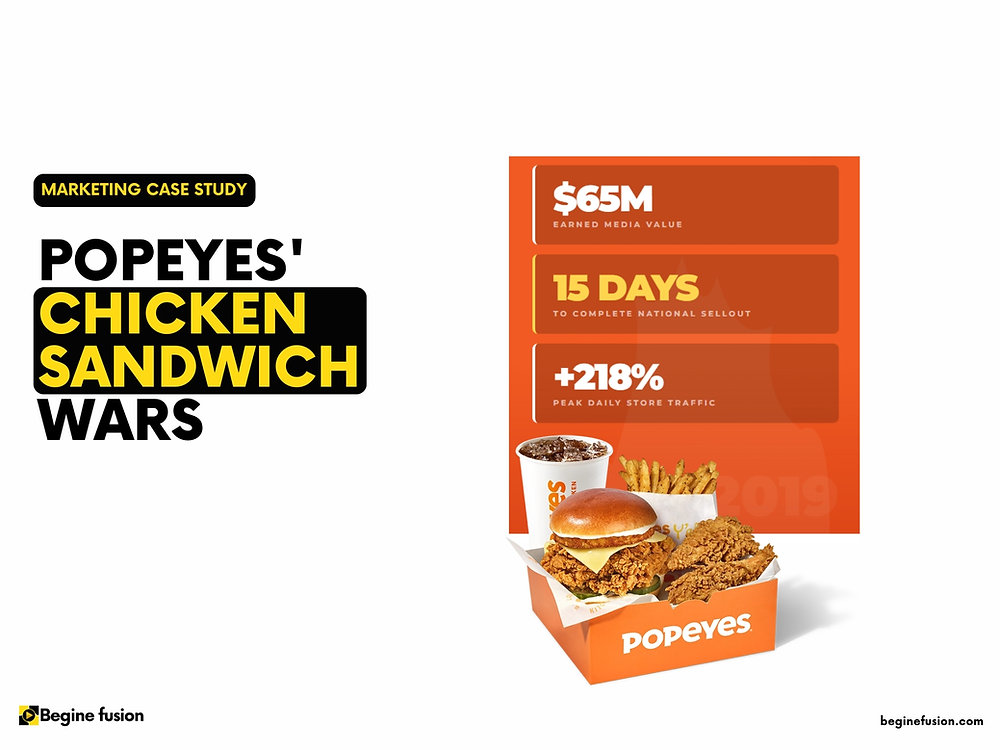
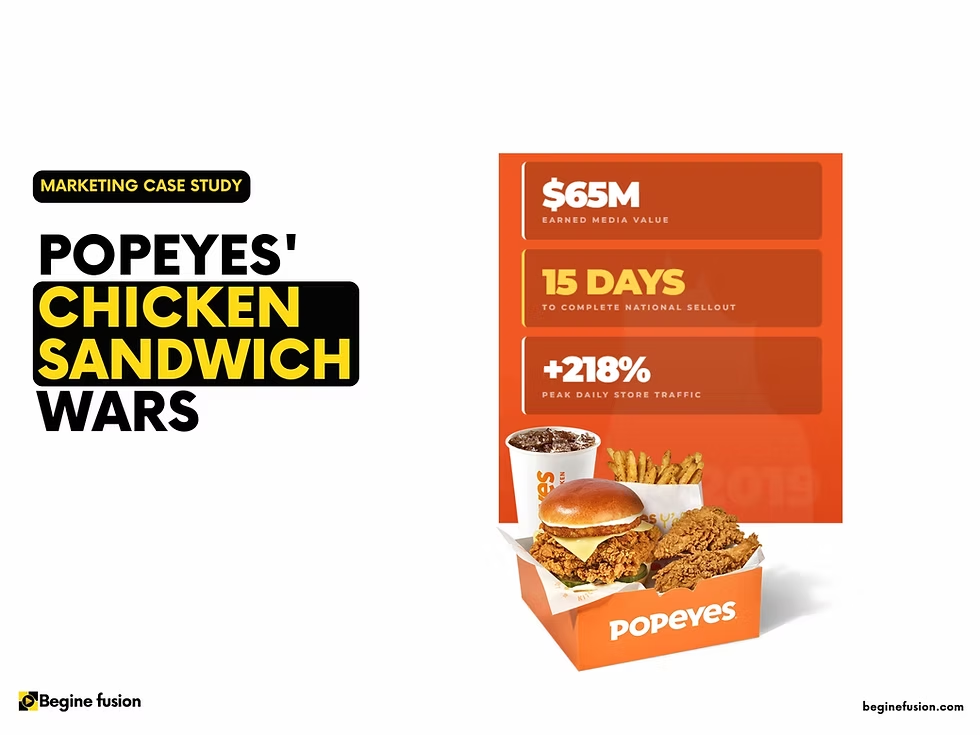
In 2019, Popeyes launched a chicken sandwich that sold out in 15 days, generated $65 million in earned media, boosted store traffic by 218%, and ignited a cultural phenomenon known as the “Chicken Sandwich Wars.”
Table of Content
- Summary
- Background
- Problem Identification
- Objectives
- Strategy
- Technology Integration
- Implementation
- User Experience
- Results
- Challenges and Solutions
- Key Takeaways
Summary
On August 12, 2019, Popeyes Louisiana Kitchen launched a new chicken sandwich that was expected to last seven weeks. It sold out in 15 days. What started as a product launch became a full-scale cultural event fueled by a viral Twitter feud with Chick-fil-A, user-generated content from customers lining up for hours, and $65 million in earned media value that Popeyes never paid for. The campaign demonstrated how a single product, combined with social media agility and competitive positioning, can generate more impact than a multimillion-dollar advertising budget. By year end, same-store sales were up 38%, and Popeyes had permanently altered the competitive landscape of the quick-service restaurant industry.
Background
Popeyes was a well-known but underperforming brand in the QSR (quick-service restaurant) space. Chick-fil-A dominated the chicken category with fierce customer loyalty, consistent quality, and cultural cachet. Popeyes’ brand awareness was strong in its core Southern US markets but weaker nationally. The company had been working with agency GSD&M to develop a product and marketing strategy that could challenge Chick-fil-A’s dominance head-on. The chicken sandwich a simple combination of a fried chicken breast, pickles, and two buns was designed to be a direct competitor to Chick-fil-A’s signature offering.
Problem Identification
- Low national brand awareness compared to Chick-fil-A, which had become a cultural institution
- Difficulty differentiating in a crowded QSR market where chicken was increasingly commoditized
- Limited marketing budget relative to major competitors like Chick-fil-A and McDonald’s
- Need to drive immediate trial and foot traffic for a new menu item without massive paid media investment
Objectives
- Drive trial of the new chicken sandwich through a successful national launch
- Generate earned media coverage and social conversation that would compensate for a limited paid budget
- Increase app downloads and digital ordering capability
- Position Popeyes as a legitimate competitor to Chick-fil-A in the chicken sandwich category
Strategy
GSD&M and Popeyes deployed a strategy that combined product excellence with social media agility:
- Product Parity: Designed the sandwich to be a near-identical format to Chick-fil-A’s iconic offering (bun, fried chicken breast, pickles), making direct comparison inevitable and inviting
- Social Media Provocation: Monitored competitor social channels and responded in real-time with a confident, understated tone letting the product speak while inviting the rivalry
- Scarcity as Strategy: When inventory ran out in 15 days, Popeyes embraced the scarcity narrative rather than apologizing, turning “sold out” into social proof of demand
- Cultural Rivalry Positioning: Framed the launch as a direct challenge to Chick-fil-A, tapping into consumer appetite for brand rivalries and team-based loyalty
- Strategic Relaunch Timing: Brought the sandwich back on a Sunday the one day Chick-fil-A is closed making the competitive statement impossible to miss
Technology Integration
- Social Listening and Rapid Response: Real-time monitoring of Twitter, Instagram, and other platforms to identify opportunities for engagement including the pivotal moment when Chick-fil-A tweeted about being “the original”
- Demand Forecasting (Lessons Learned): Initial supply chain planning underestimated demand by a factor of 3x. The failure became a learning moment that informed the more solid relaunch supply planning
- App Infrastructure: Mobile app served as a critical tool for managing demand during the relaunch, featuring push notifications alerting users when the sandwich was available and location-based inventory tracking
- Digital Ordering Systems: Expanded digital ordering capability to manage the surge in demand and reduce in-store chaos during peak periods
Implementation
The campaign unfolded organically across several stages:
- Product Launch (August 12, 2019): National rollout of the chicken sandwich with standard promotional support through GSD&M
- The Viral Tweet (August 19, 2019): Chick-fil-A tweeted claiming to be “the original.” Popeyes responded with “…y’all good?” a two-word tweet that generated 325,000+ likes and 87,700 retweets
- Demand Explosion (August 19-27): Consumer frenzy drove lines around the block, social media content from customers, and wall-to-wall media coverage
- Sellout (August 27, 2019): Sandwich sold out nationally after 15 days, against a projected 7-week supply
- Scarcity Narrative: Popeyes embraced the “BYO bun” CTA, suggesting customers bring their own buns to enjoy Popeyes chicken tenders turning a supply failure into a viral moment
- Strategic Relaunch (November 3, 2019): Brought the sandwich back as a permanent menu item on a Sunday a direct shot at Chick-fil-A’s Sunday closure policy
- Recruitment Stunt: Ran classified ads in the New York Times, New York Post, and other newspapers seeking “chicken sandwich makers who can work on Sundays” with the contact email SundayOpenings@Popeyes.com
User Experience
- Consumers encountered the sandwich through social media conversation, friend recommendations, and media coverage not traditional advertising
- The scarcity created urgency, with customers checking multiple locations and sharing availability updates on social media
- Lines of 30+ customers became a social experience in themselves, with people filming wait times and reactions for TikTok and Instagram
- The Popeyes app became a utility tool customers used it to check which locations still had sandwiches in stock
- The relaunch brought back the product as a permanent menu item, resolving the scarcity while maintaining the cultural momentum
Results
The Chicken Sandwich Wars produced historic results for Popeyes:
- Earned Media Value: $65 million in equivalent media value from viral conversation and press coverage (Apex Marketing Group)
- Traffic Surge: 103% increase in overall traffic; peak of 218.2% above average (Sense360 data)
- Sales Growth: 38% increase in same-store sales for 2019; Q4 same-store sales up 37.9% in the US
- Revenue Impact: System-wide sales rose to $4.4 billion (up 18% YoY); Q4 system-wide sales surged 42.3% YoY
- Per-Store Economics: Average sales per restaurant increased from $1.4 million to $1.8 million a $400,000 lift per location
- Social Media Explosion: 178x more Twitter mentions during the two-week viral period vs. the same period the previous year; 30% market share increase in the week after the viral tweet (Sense360)
- Award Recognition: Gold Award at the 12th Annual Shorty Awards for social media/digital marketing excellence
Challenges and Solutions
- Catastrophic Stockouts: Selling out in 15 days against a 7-week supply was a supply chain failure. Popeyes used the scarcity to fuel demand rather than apologizing, and invested significantly in supply chain capacity for the relaunch
- Operational Strain: Store-level operations weren’t designed for the surge in traffic. Popeyes expanded staffing, adjusted kitchen workflows, and implemented demand management systems
- Safety Concerns: Long lines and high demand created safety incidents at some locations. Popeyes worked with local authorities and implemented crowd management protocols
- Sustaining Momentum: After the initial frenzy, maintaining interest was critical. The strategic Sunday relaunch and ongoing social media presence kept the conversation alive
Key Takeaways
- Social proof plus rivalry can mint demand fast: The Chick-fil-A feud gave consumers a side to choose, transforming a product launch into a cultural event. People weren’t just buying a sandwich they were making a statement
- Two words can outperform a $50 million campaign: Popeyes’ “…y’all good?” tweet cost nothing and generated more engagement than most Super Bowl ads. Brand voice and timing matter more than production value
- Scarcity is social proof: Selling out wasn’t a failure it was the most powerful endorsement possible. “It’s so good they ran out” is a better testimonial than any celebrity endorsement
- Plan supply for viral upside: The 15-day sellout was a supply chain failure that happened to become a marketing win. The lesson: always plan for the scenario where everything works better than expected
- Strategic timing multiplies impact: Relaunching on a Sunday when Chick-fil-A is closed was a masterclass in competitive positioning that required zero additional marketing spend
Sources
- CNBC Popeyes sold 1,000 sandwiches daily, doubling traffic
- QSR Magazine Just How Big of a Deal Was the Chicken Sandwich?
- Restaurant Dive Traffic boosted 218%
- Restaurant Business Online Deeper Look at Popeyes’ Historic Quarter