
AI for Project Reporting: Automate the Assembly, Not the Judgement
Ask a project lead why the monthly client report takes so long and they will say they are not a fast writer. Watch them do it and the writing takes twenty minutes. The rest of the day goes to working out which of three systems is telling the truth about how much of the budget is gone.
TL;DR
- Reporting is five stages: collection, reconciliation, narrative, judgement and approval. They cost wildly different amounts.
- Reconciliation is where the day goes. The numbers disagree because the systems were never joined, and somebody decides by hand every month.
- Most reporting tools automate the narrative, which is the cheapest stage. That is why the time saved disappoints.
- Generation requires one agreed source per number. Without that, AI produces a fluent report that is confidently wrong, faster than before.
- Judgement does not automate. Whether a client is quietly unhappy is not in any system, and it is usually the most valuable line in the report.
- Fix the source of truth first. It is unglamorous, it is not an AI project, and it is the thing that makes the AI project work.
Where the day actually goes
A status report looks like a writing task, so firms treat it as one. The five stages underneath it cost very different amounts of time, and only one of them is writing.
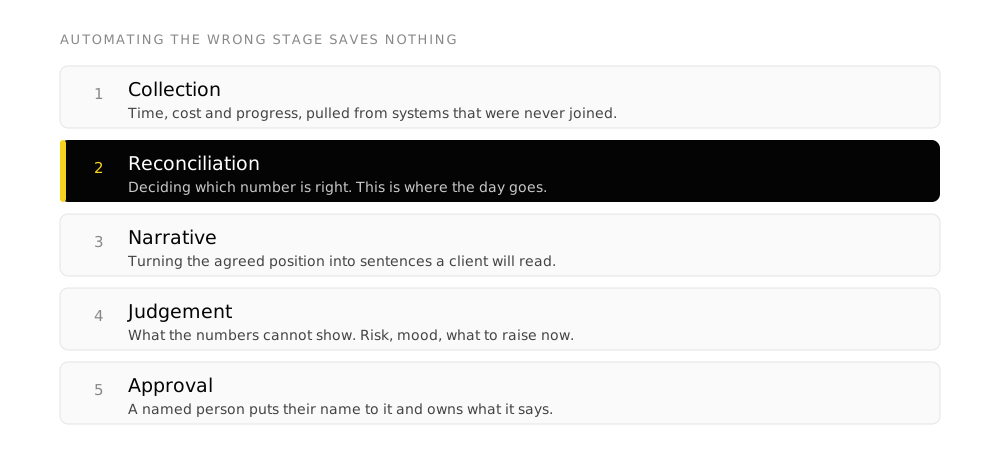
Reconciliation is the expensive stage because it is a decision, not a lookup. The time system says one number because somebody logged hours to the wrong phase. The project tool says another because a task was marked complete when the draft went out rather than when it was accepted. The finance export says a third because it counts a subcontractor invoice that has not been posted yet.
None of these is wrong exactly. They answer slightly different questions, and every month a person quietly decides which question the client is asking and reports that. That decision leaves no trace, which is why the next person to produce the report starts from nothing.
Why generated reports go wrong
Point a generator at those same three systems and it will produce a fluent report containing a number that no one chose. It cannot make the reconciliation decision because that decision depends on knowing why the systems disagree, and nothing in the data says why.
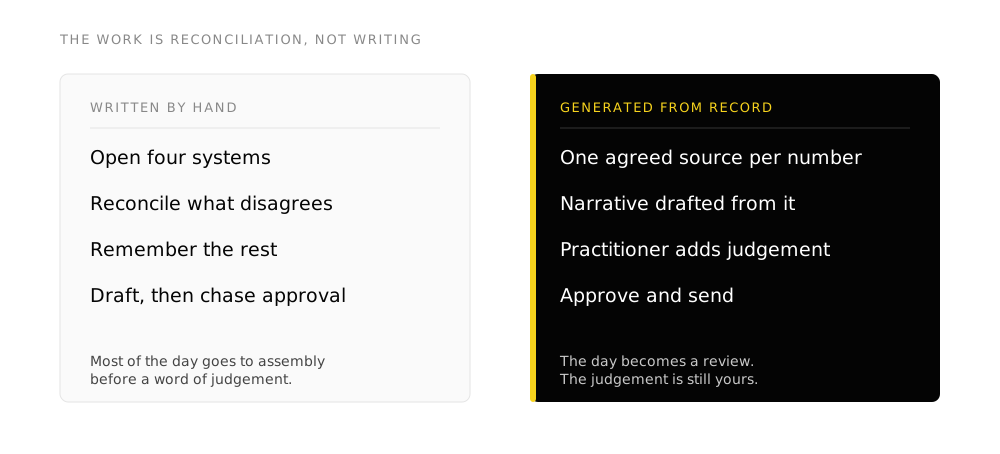
The precondition is boring and it is the entire job: one agreed source per number. For each figure that appears in the report, the firm decides which system owns it, what it counts, and when it is considered final. Budget consumed comes from here. Percentage complete means this specific thing. Costs are counted at this moment in their lifecycle.
That is a definition exercise, not a technology purchase. It takes a few hours per report type and it is the difference between generation that works and generation that produces confident nonsense.
Worth keeping
- If two systems can answer the same question differently, no generator can resolve it. Decide the owner of each number first.
- Write the definitions down where the report is produced, not in a document nobody opens.
- The reconciliation decision your team already makes monthly is the specification. Ask them what they do and record it.
What AI does well here
Once the numbers are settled, several parts of reporting suit automation well, and they are worth naming precisely.
Turning an agreed position into readable prose in the firm's usual structure. This is genuinely useful and genuinely small, so treat the time saved as a convenience rather than the business case.
Comparing this period against the last and listing the differences worth mentioning. Practitioners are unreliable at this because they remember what was salient rather than what moved, and a system does not have that bias.
Flagging a phase with no time logged, a milestone whose date has passed with no update, or a risk that was raised twice and never closed. This is where automated reporting earns its place, because it is work nobody currently does.
Producing the same structure across every engagement, so a reader can compare two reports without relearning the layout. Consistency is hard to sustain by hand across a busy team.
Assembling a draft with the open questions marked, so the review starts from a position rather than from a blank page. This is the shape of the gain: the day becomes a review instead of an assembly job.
Notice what those have in common. They are all preparation. The report still leaves the firm under somebody’s name, and that person still has to agree with what it says.
What does not automate
Judgement is the part clients are actually paying attention to, and it is not in any system.
Whether the client is content. Whether the delay that looks minor is the one that will matter in six weeks. Whether to raise a scope concern now while it is small or wait until there is more evidence. Whether the number that is technically accurate will be read as a problem, and whether to explain it before it is asked about.
A practitioner knows these from conversations, tone and experience. None of it is logged anywhere, so no amount of retrieval reaches it.
The stage worth protecting is the one where somebody who has spoken to the client this month decides what the client needs to be told.
There is a second reason to protect it. The monthly report is often the only moment where somebody steps back and looks at the whole engagement. Automate the assembly and that moment gets shorter, which is the point. Automate the thinking and the moment disappears, and the first sign of trouble arrives later than it used to.
Where to start
Start with the report that gets produced most often, because that is where a definition pays back fastest.
-
Take one report apart
List every figure and statement in it. For each one, write where it currently comes from and who decides it when the sources disagree. Most firms find between four and eight contested numbers, and the same ones are contested every month.
-
Settle each contested number
Decide which system owns it, what exactly it counts, and at what point it is final. Write the definition next to the number rather than in a separate standards document. This is the step that makes everything after it possible.
-
Generate the draft, keep the review
Produce the narrative and the change list automatically, with the open questions marked. The practitioner adds judgement and approves. Measure whether the review is genuinely shorter, because if it is not, the draft is not trusted and you will learn why quickly.
-
Add the missing-item checks
Once the basic report is reliable, add the flags for things nobody currently catches: silent phases, passed dates, unresolved risks. This is usually where the value ends up, and it only works on a foundation that people already trust.
The definitions in step two are the durable asset. They outlive whichever tool produces the report, and they are also what makes the reports comparable across engagements, which most firms want and few have.
Common mistakes
- Automating the narrative and calling it done. Why it fails: writing was never the expensive stage, so the saving is small and the underlying reconciliation still happens by hand. Better: settle the contested numbers first, then automate.
- Letting the generator pick between disagreeing sources. Why it fails: it will pick consistently and silently, and nobody will notice until a client queries a figure. Better: define one owner per number, and have the system flag conflicts rather than resolve them.
- Removing the practitioner's review to save more time. Why it fails: the review is where judgement enters and where problems are first noticed. Better: shorten the review by improving the draft, and keep the approval a real decision.
- Reporting what the systems can measure rather than what the client asked. Why it fails: automation makes it easy to fill a report with available metrics, and a client reading eleven charts is not better informed. Better: keep the report to what the client uses to make decisions.
- Building it for the exception. Why it fails: designing around the most complicated engagement produces something too heavy for the ordinary ones, which are the majority. Better: build for the common case and handle the outliers by hand.
- Skipping the definitions because the tool promises integration. Why it fails: integration moves data between systems and does not decide which of two numbers is correct. Better: treat the definition work as the project, and the connection as plumbing.
What this article does not claim
It does not claim a figure for hours saved. Numbers circulate for reporting automation and the traceable ones come from product marketing, so none is published here.
It does not claim any specific tool does this. The five stages are a property of how your firm reports, and the reconciliation problem exists regardless of what you buy.
It claims the assembly should be shorter, and that the judgement is worth every minute it takes.
- Status report
- A periodic account of an engagement's position, usually covering progress, budget, risks and next steps, issued to a client or an internal sponsor.
- Reconciliation
- Deciding which figure is correct when several systems answer the same question differently, and doing it consistently enough that periods can be compared.
- Source of truth
- The system designated as owning a particular number, so that a disagreement has a defined resolution rather than a monthly negotiation.
- Percentage complete
- A progress measure that means nothing until the firm defines what it counts, which is why two engagements often report it on different bases.
- Realisation
- The share of recorded time that is ultimately billed and collected, and a common reason reported cost and invoiced cost differ.
- Variance
- The difference between planned and actual on a measure such as cost or schedule, meaningful only when both sides use the same definition.
- Exception reporting
- Reporting only what falls outside expected bounds, which suits automation because the checks are explicit and repeatable.
- Assembly
- The collection and reconciliation work that happens before a report can be written, and the part of the task most firms underestimate.
Questions firms ask
Can AI just read our systems and produce the report?
It can read them and produce something. Whether that something is correct depends on whether the systems agree, and in most firms they do not. Settle the contested numbers first and the generated report becomes reliable.
How do we know which numbers are contested?
Ask whoever produces the report what they check twice. They already know, because they resolve it every period. That conversation usually takes half an hour and produces the whole list.
Should the client know the report was drafted with AI?
Treat it as a client-communication decision rather than a technical one, and check any disclosure duty that applies to your profession or your engagement terms. The safer default is that a named person approves the report and stands behind it, which is what the client is relying on either way.
What if our project data is genuinely poor?
Then reporting automation will expose that rather than fix it, which is uncomfortable but useful. Start with the small number of figures the client actually reads and get those right, instead of waiting for the whole dataset to improve.
Does this work for fixed-fee engagements?
The definitions matter more there, because the interesting figure is effort against a fixed price rather than hours billed. The five stages are the same and the contested numbers are usually fewer.
Where does the knowledge base fit?
Reporting draws on prior engagements for comparison and for standard language, so the same signal problem applies. If your archive cannot say which template is current, see AI for knowledge management before connecting reporting to it.
What is the first sign this is working?
The review gets shorter while the questions raised in it get better. If practitioners are still rebuilding the numbers before they approve, the draft is not trusted and the definitions are not settled yet.