
Case Study: Apple's "Shot on iPhone" Campaign
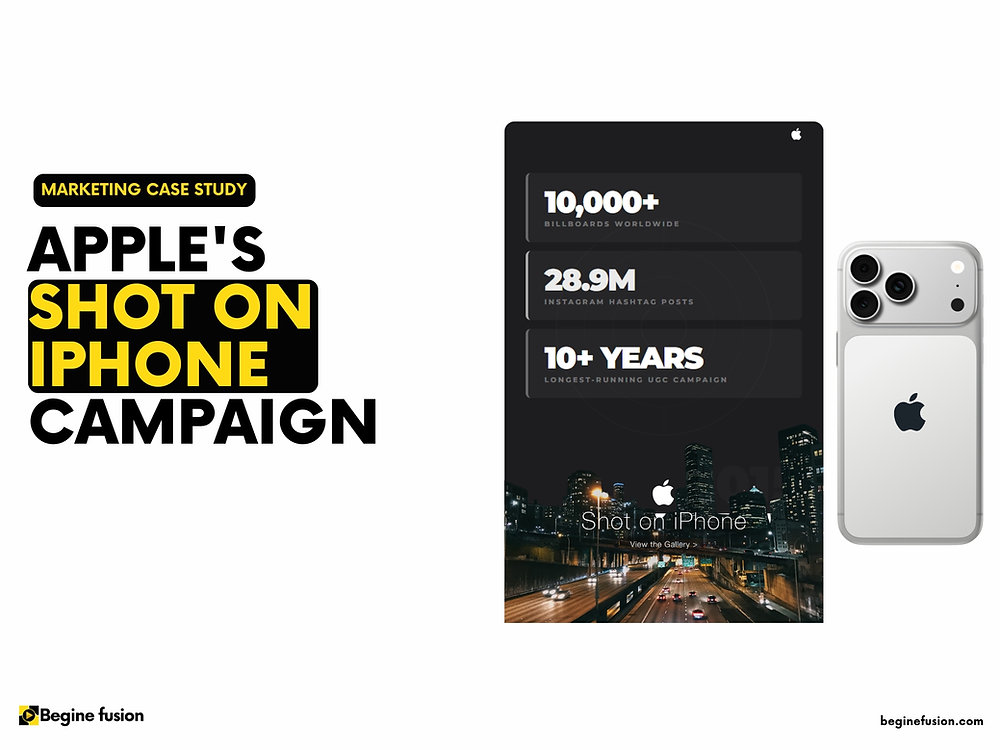
In 2015, Apple launched one of the most enduring user-generated content campaigns in marketing history, turning everyday iPhone users into brand ambassadors and billboard stars across 26 countries.
Table of Content
- Summary
- Background
- Problem Identification
- Objectives
- Strategy
- Technology Integration
- Implementation
- User Experience
- Results
- Challenges and Solutions
- Key Takeaways
Summary
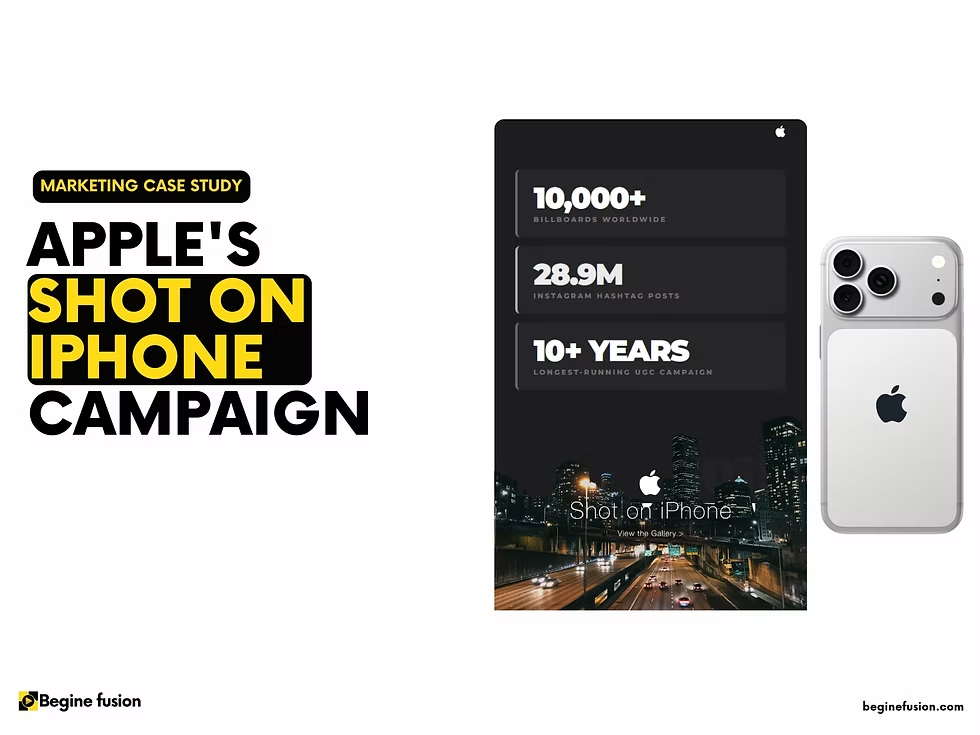
In March 2015, Apple launched the “Shot on iPhone” campaign to showcase the camera capabilities of the iPhone 6. Rather than relying on traditional advertising with studio-produced imagery, Apple curated photos taken by real iPhone users and displayed them on billboards, transit ads, and digital platforms across 26 countries. The campaign evolved into a decade-long brand property, winning the Cannes Grand Prix for Creative Effectiveness in 2025 and accumulating over 28.9 million Instagram posts under the #ShotoniPhone hashtag. It remains one of the most successful user-generated content (UGC) initiatives in advertising history.
Background
By 2015, the smartphone camera wars were intensifying. Samsung, Google, and other competitors were making aggressive claims about camera superiority using technical specifications and lab benchmarks. Apple needed a different approach, one that demonstrated real-world results rather than spec sheets. The iPhone 6 had just launched in September 2014, and Apple wanted to prove that its camera could produce professional-quality images in the hands of ordinary people.
Problem Identification
- Premium smartphone fatigue, consumers saw diminishing differences between flagship devices
- Camera quality claims were becoming a spec-sheet war that failed to resonate emotionally with buyers
- Traditional advertising felt disconnected from how people actually used their phones
- Competitors were closing the gap on camera technology, making differentiation harder
Objectives
- Demonstrate iPhone camera superiority through real-world proof rather than technical specs
- Drive consideration and purchase intent among photography-conscious consumers
- Build a sustainable, repeatable campaign framework that could evolve with each new iPhone generation
- Create cultural moments around iPhone photography that transcended traditional advertising
Strategy
Apple developed a multi-layered strategy built on authenticity, community, and scale:
- User-Generated Content Curation: Selected the best photos taken by iPhone users worldwide, turning customers into creative collaborators
- Global Out-of-Home Domination: Installed over 10,000 billboards across 73 cities in 26 countries, featuring user photos with minimal branding, just “Shot on iPhone” and the photographer’s name
- Community Building: Created the @ShotoniPhone Instagram account (now 23.8 million followers) to showcase an ongoing stream of user content
- Annual Tentpole Activations: Aligned campaign pushes with seasonal themes sports, nightlife, macro photography to keep the content fresh
- Cross-Platform Amplification: Extended beyond OOH into social media, YouTube, and Apple’s own marketing channels
If you’re looking to build a similar UGC-driven social media strategy for your brand, tools like Cloud Campaign and SocialBee can help you manage content curation and scheduling across platforms at scale.
Technology Integration
- Community Sourcing Platform: Apple developed internal workflows to discover, curate, and obtain rights for user-submitted photos from social media platforms
- Hashtag Monitoring: Automated monitoring of #ShotoniPhone across Instagram, Twitter, and other platforms to surface high-quality submissions
- Global OOH Versioning: Localized photo selection for each market, ensuring cultural relevance while maintaining brand consistency
- Variable Print Production: Large-format printing technology to produce thousands of unique billboard designs simultaneously
- Verification Systems: Processes to confirm each submitted photo was genuinely captured on an iPhone without third-party camera hardware
For brands building their own content curation and monitoring workflows, platforms like Zoho One provide an integrated business operating system that combines social monitoring, project management, and marketing automation in one suite.
Implementation
The campaign was rolled out in several stages:
- Initial Curation (2015): Selected photos from 77 users across 25 countries and 73 cities for the first wave
- Global Billboard Rollout: Installed 10,000+ billboards worldwide with a minimalist design, user photo, photographer credit, and “Shot on iPhone” tagline
- Social Media Engine: Launched @ShotoniPhone on Instagram as a permanent gallery, creating a continuous content pipeline
- Expansion (2019): Opened submissions to the general public via social media, democratizing participation
- Video Integration (2021): Added video content eligibility, showcasing iPhone’s cinematic capabilities
- AI Photography (2023): Included AI-enhanced computational photography features in eligible submissions
- AR Category (2025): Introduced augmented reality content for the campaign’s 10th anniversary
.
User Experience
- Users submitted photos organically by posting on Instagram or other social platforms with #ShotoniPhone
- Selected photographers received notification that their work would be featured in Apple’s global campaign
- Featured photographers gained massive exposure, their names appeared on billboards in major cities worldwide
- The @ShotoniPhone Instagram account became a community hub where aspiring photographers could discover and engage with featured work
- Apple later introduced direct submission options, giving users a clear pathway to participate
Results
The Shot on iPhone campaign delivered exceptional results across multiple dimensions:
- Sales Impact: 231 million iPhone units sold in 2015, the campaign launch year, up 62 million from the previous year
- Social Media Reach: 28.9 million Instagram posts using #ShotoniPhone; 4.2 billion TikTok views on campaign-related content
- Community Scale: @ShotoniPhone Instagram account grew to 23.8 million followers with 671+ posts
- Award Recognition: Cannes Lions Outdoor Grand Prix (2015); five Gold Lions (2015); Cannes Grand Prix for Creative Effectiveness (2025); D&AD Pencil; CLIO Award for Integrated Campaign
- Earned Media: An estimated 6.5 billion media impressions and 24,000 opinion leader mentions with 95% positive sentiment
- Cultural Endurance: The campaign has run continuously for over 10 years, making it one of the longest-running brand campaigns in tech
Challenges and Solutions
- Attribution to Sales: Isolating the campaign’s direct impact on iPhone sales was difficult given the many variables affecting purchase decisions. Apple addressed this by focusing on brand lift metrics and creative effectiveness measurements rather than direct attribution
- Quality Control at Scale: With millions of submissions, maintaining a consistent quality standard required significant curation resources. Apple built dedicated review teams and processes to evaluate every potential feature
- Authenticity Scrutiny: Critics pointed out that some featured content was created using professional equipment alongside iPhones. Apple responded by tightening verification processes and emphasizing genuine iPhone-only captures
- Campaign Fatigue: Running the same concept for over a decade risked staleness. Apple countered by evolving the campaign annually, adding video, AI photography, and AR categories to keep it fresh
For brands managing large-scale content operations, AI-powered tools like Jasper and Writesonic can help generate supporting copy for campaigns, while Notion AI keeps teams organized across complex, multi-market workflows.
Key Takeaways
- Elevate users, don’t just feature them: Apple didn’t simply repost user photos. They put photographers’ names on billboards in Times Square. That level of recognition turns customers into lifelong brand advocates
- Build a repeatable ritual: The campaign’s structure allowed Apple to refresh it annually without reinventing the wheel, creating predictable cultural moments tied to each product launch
- Proof beats specs: Instead of arguing about megapixels and sensor sizes, Apple let the work speak for itself. Real photos from real people were more persuasive than any spec sheet
- Design for longevity: The minimalist creative format, photo, name, tagline, was flexible enough to adapt across cultures, languages, and media formats for over a decade
- Any brand with visual outcomes can replicate this model: Whether you sell cameras, food, fitness equipment, or travel experiences, a curated UGC program built on genuine customer results can become a powerful brand asset
To build your own visual content pipeline, consider tools like Leonardo AI for AI-generated imagery, Invideo for video creation, and Canva for design, all of which can complement user-generated content with professional polish.