
Case Study: Always' #LikeAGirl Campaign
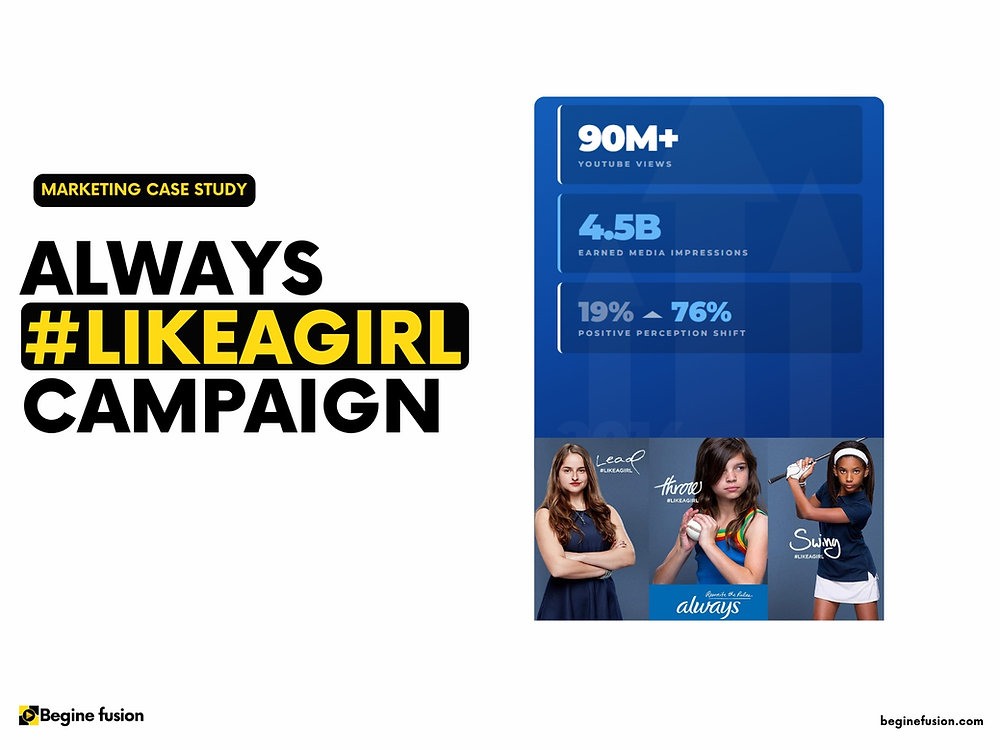
In 2014, Always turned a phrase used as an insult into a global confidence movement generating 90+ million YouTube views, 4.5 billion earned media impressions, and becoming the first feminine hygiene brand to advertise during the Super Bowl.
Table of Content
- Summary
- Background
- Problem Identification
- Objectives
- Strategy
- Technology Integration
- Implementation
- User Experience
- Results
- Challenges and Solutions
- Key Takeaways

Summary
On June 26, 2014, Always (a Procter & Gamble brand) launched the #LikeAGirl campaign a social experiment film directed by award-winning documentary filmmaker Lauren Greenfield that exposed how the phrase “like a girl” was used as an insult to mock weakness. The campaign asked people of different ages and genders to demonstrate actions “like a girl” adults performed clumsily and mockingly, while young girls ran fast, threw hard, and fought with genuine effort. The contrast was devastating and revelatory. The campaign generated 90+ million YouTube views, 4.5 billion earned media impressions, shifted positive perception of the phrase from 19% to 76% among young women, and won the inaugural Glass Lion at Cannes. It became a blueprint for purpose-driven marketing that delivers measurable brand results.
Background
Always, a P&G feminine hygiene brand, had been a category leader for decades but was losing relevance with younger consumers. Research showed that more than 50% of girls experience a significant confidence decline during puberty the exact life stage when they first encounter Always’ products. The brand’s existing messaging was functional and clinical, missing an opportunity to connect emotionally during a critical moment in its target audience’s development.
Problem Identification
- The phrase “like a girl” was universally used as an insult, reinforcing negative stereotypes at the exact age when girls began using Always products
- Declining brand relevance among teen and young adult consumers who saw feminine hygiene brands as commoditized and emotionally disconnected
- Category advertising was dominated by functional claims (absorbency, comfort) that failed to differentiate brands
- A documented confidence drop during puberty created both a cultural problem and a brand opportunity that no competitor was addressing
Objectives
- Reposition Always as a confidence ally for girls during puberty, not just a hygiene product
- Drive meaningful brand preference and purchase intent among the target demographic
- Transform the negative connotation of “like a girl” into a badge of empowerment
- Generate cultural conversation that extended far beyond traditional advertising reach
Strategy
Leo Burnett (Toronto, London, and Chicago offices) developed a strategy rooted in cultural tension and emotional truth:
- Social Experiment Format: Rather than creating a traditional ad, they produced a documentary-style film that revealed an uncomfortable truth showing the stark contrast between how adults and young girls interpreted “like a girl”
- Emotional Storytelling: Let the participants’ authentic reactions tell the story, avoiding scripted dialogue or obvious brand messaging
- PR-First Distribution: Launched the film online and through PR channels before any paid media, allowing organic sharing and editorial coverage to build momentum
- Education Partnerships: Extended beyond advertising into schools with discussion kits and confidence-building programs
- Super Bowl Amplification: Condensed the film into a 60-second Super Bowl spot the first-ever feminine hygiene advertisement during the Big Game to reach the broadest possible audience
Technology Integration
- Social Video Distribution: Optimized the film for sharing across YouTube, Facebook, Twitter, and emerging platforms, with platform-specific edits for each channel
- Influencer and PR Engine: Seeded the campaign with educators, women’s organizations, and social media influencers who could authentically amplify the message
- Social Listening: Monitored real-time conversation around #LikeAGirl to identify amplification opportunities and respond to cultural moments
- Campaign Measurement: Deployed brand tracking studies (Millward Brown) to measure shifts in brand equity, purchase intent, and phrase perception
Implementation
The campaign was deployed through a carefully phased rollout:
- Research Phase: Conducted studies documenting the confidence drop during puberty and the negative impact of gendered language
- Film Production: Documentary filmmaker Lauren Greenfield directed the social experiment, capturing genuine reactions from participants of varying ages and genders
- Online Launch (June 26, 2014): Released the full three-minute film on YouTube and social platforms, supported by PR outreach to media outlets and influencers
- Organic Growth Phase: Allowed the film to spread organically through shares, editorial coverage, and social conversation before introducing paid media
- Super Bowl Broadcast (February 2015): Aired a condensed 60-second version during Super Bowl XLIX, becoming the first feminine hygiene brand in Super Bowl history
- Education Extension: Partnered with TED and academic researchers to develop classroom materials teaching confidence to girls at puberty
- Follow-Up Campaign (2015): Released “Always #LikeAGirl Unstoppable,” expanding the conversation to address how societal expectations hold girls back
User Experience
- Viewers encountered the film as shared content from friends, family, and trusted voices not as advertising
- The social experiment format invited viewers to reflect on their own unconscious biases, creating a personal emotional connection
- #LikeAGirl became a hashtag that users adopted for their own empowerment stories, creating a community of shared experience
- The Super Bowl broadcast introduced the campaign to audiences who hadn’t seen it online, creating a second wave of cultural conversation
- Educational materials brought the conversation into classrooms, giving teachers a framework for discussing confidence and gender
Results
The #LikeAGirl campaign delivered transformational results across every dimension:
- Video Reach: 90+ million YouTube views; 132 million+ total views across all Always official videos
- Earned Media: 4.5 billion earned media impressions worldwide; 1,800+ earned media placements globally
- Perception Shift: Positive association with “like a girl” jumped from 19% to 76% among 16-24 year-old females; 59% of males also shifted perception
- Brand Equity: Always Pads Equity increased from 38.1 to 41.4 points in the US market, while competitors saw slight declines
- Purchase Intent: Grew more than 50% among the target audience; 50% of women chose Always over competitors post-campaign
- Awards: Cannes Grand Prix in PR; inaugural Glass Lion; 14 total Cannes Lions; Primetime Emmy Award; UN Award for impact on female empowerment
- Cultural Impact: Adobe ranked it the top digital campaign of Super Bowl 2015; named among “World’s Best Ads Ever” by multiple publications
Challenges and Solutions
- Authenticity Scrutiny: As with any purpose-driven campaign from a large corporation, critics questioned whether P&G’s motivations were genuine. Always addressed this by backing the campaign with real investment education programs, academic partnerships, and a multi-year commitment to the cause rather than a one-off campaign
- Balancing Purpose and Product: The campaign needed to drive business results, not just cultural conversation. The team ensured brand tracking was in place to measure concrete shifts in equity and purchase intent alongside cultural metrics
- Global Adaptation: Rolling the campaign out across 150+ countries required navigating different cultural attitudes toward gender, feminism, and advertising. Localized versions maintained the core insight while adapting for cultural context
- Sustaining Momentum: Purpose campaigns risk becoming one-hit wonders. Always countered this by releasing follow-up campaigns and ongoing education programs that kept the conversation alive
Key Takeaways
- If you own a cultural tension, you earn brand permission: Always didn’t just make an ad they addressed a real cultural problem that was directly connected to their audience’s life stage. That alignment between brand purpose and customer reality created authentic permission to lead the conversation
- Social experiments reveal truth more powerfully than claims: Showing real people confronting their own biases was infinitely more persuasive than any brand-produced message could have been
- PR-first distribution builds credibility: Launching through editorial and organic channels before paid media meant the campaign was covered as news and culture, not advertising dramatically increasing its credibility and reach
- Purpose drives performance when backed by measurement: The campaign worked because Always tracked hard business metrics alongside cultural impact. Purpose without performance data is charity; purpose with performance data is strategy
- This model transfers to any stigmatized category: Any brand whose product connects to a cultural tension, stigma, or underserved community can build a similar campaign feminine hygiene, mental health, disability, aging, and beyond
Sources
- P&G Official News Release New Social Experiment by Always Reveals Harmful Impact of “Like a Girl”
- Leo Burnett #LikeAGirl Wins Grand Prix at Media, PR, Outdoor, Glass, and Creative Effectiveness Lions
- Campaign Live Case Study: Always #LikeAGirl
- Institute for PR Always #LikeAGirl: Turning an Insult into a Confidence Movement