
TL;DR
- One team: your business has different arms. Begin with a pilot in one team or function.
- Map it: a process mapping audit shows how that team works: the inputs, the outputs and the handoffs to other departments.
- A couple of people: plan the pilot with the most critical function and a couple of people.
- Bottom line: aim AI at the critical places closest to revenue and the bottom line, where the returns show quickly.
- Phases: build an implementation plan and roll it out in different phases.
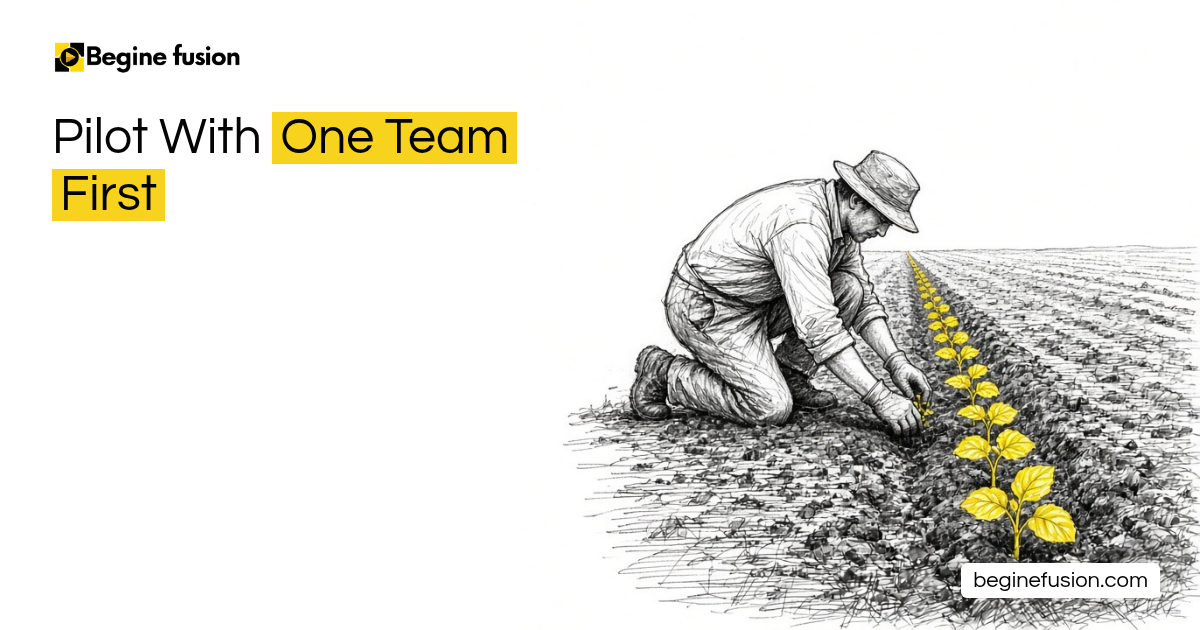
When a business asks how to bring in a new system or AI, we always begin with a pilot. You have different arms in your business, so we begin with one team within your business, or one function, and run the pilot with that function.
Begin with one team
Which team? Ask where you are having the biggest challenge right now, the problem you most need to solve. That is a good place to begin.

If there is a team of people working there, we start working with that team. Our post on beginning with one AI agent covers the same idea for agents.
Pilot with a couple of people
We figure out the things that are most critical for you right now across your different functions. We begin with the most critical, plan it and run a pilot phase with a couple of people.

Often the first job in the pilot is the data: exporting it, cleaning it up and putting it into categories, labels, subcategories and tags. When that is done, we move on to configuration and automation, and we present the project implementation plan.
Map how that team works
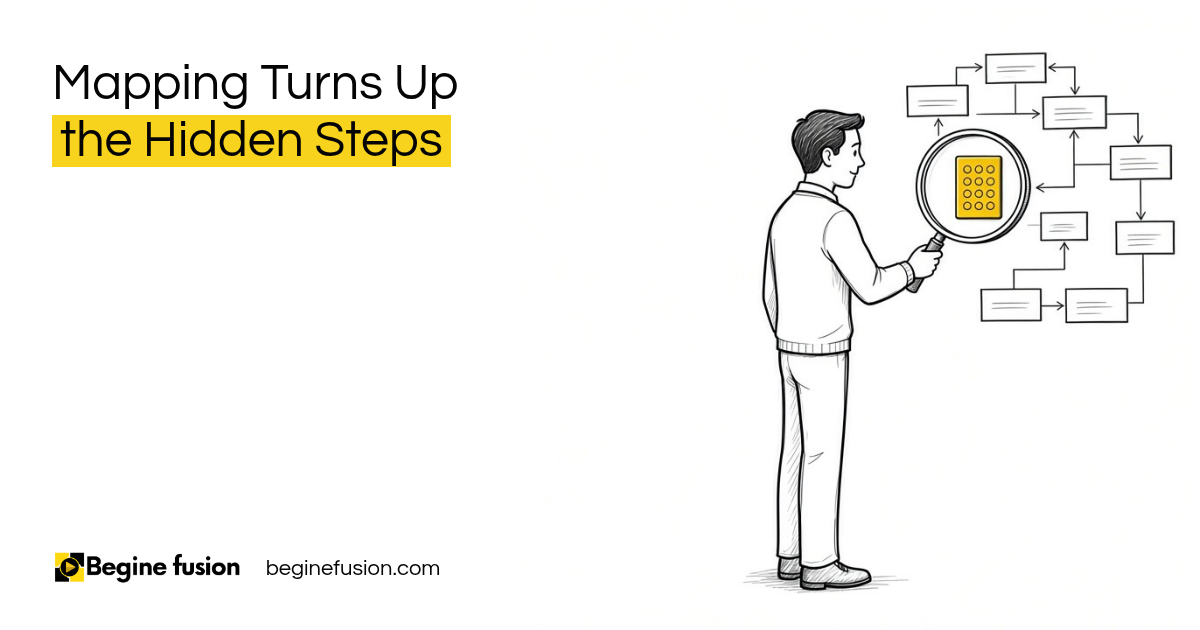
Inside the pilot, we do a process mapping audit and a needs analysis, so we understand exactly how the whole team works. What they work on, what the input is, what the output is, which other departments feed into what they do, and where they hand something off.
That gives an overall view of what that function is working on. When we go through process mapping, we always find things that were hidden at first. You were focused on this, and there is something bigger somewhere else that we need to look at. Our post on how process mapping finds hidden steps covers what turns up.
Aim AI close to the bottom line
From the map, we identify where and how to plug in an AI solution. We call it an AI fit discovery: finding the critical places where AI can give you the most value.
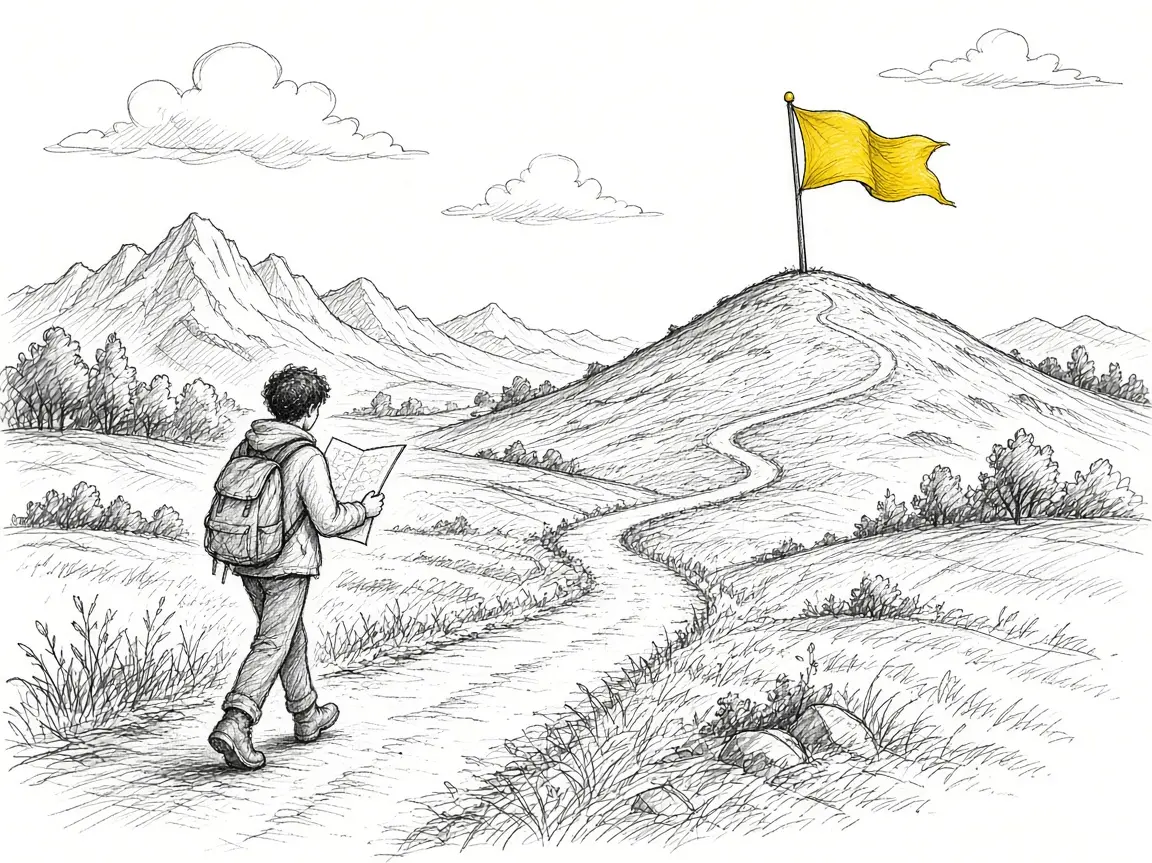
We keep it close to revenue and the bottom line, so you can see returns on your AI investment quickly. The question is where exactly it is going to move the needle the most. If we fix that thing and put AI in there, how does it impact the business overall?
Roll it out in phases
After the pilot, we build an implementation plan and help you roll it out in different phases. One team at a time, the rest of the business follows.

A phased rollout also helps the people side. Our post on resistance to change covers why people take to a new system at different speeds.
Takeaways and next steps
- Your business has different arms, so pilot with one team or function.
- Choose the team where the biggest challenge is right now.
- Run the pilot with a couple of people and the most critical function.
- Map the team’s inputs, outputs and handoffs before plugging in AI.
- Aim AI at the places closest to revenue and the bottom line.
- Build an implementation plan and roll it out in phases.
Common mistakes with a pilot
1. Rolling out to the whole business at once.
Why it fails: Every arm of the business changes on the same day, and problems spread across all of them.
Better approach: Pilot with one team or function, then roll out in phases.
2. Plugging in AI before mapping the work.
Why it fails: The AI lands where it is nice to have, far from revenue.
Better approach: Map inputs, outputs and handoffs, then aim AI close to the bottom line.
3. Picking the pilot team at random.
Why it fails: The pilot solves a minor problem and the returns take a long time to show.
Better approach: Choose the team with the biggest challenge right now.
Frequently asked questions
Why pilot with one team?
Your business has different arms. One team or function lets you map the work, fix it and learn before rolling out.
Which team should go first?
The one where you are having the biggest challenge right now, ideally close to the bottom line.
What happens in the pilot?
A process mapping audit and needs analysis of how that team works, the data work, then configuration and automation.
What is an AI fit discovery?
Finding the critical places where AI can give you the most value, close to revenue and the bottom line.
What comes after the pilot?
An implementation plan and a rollout in different phases.
Glossary
- Pilot
- A first rollout with one team or function before the rest of the business.
- Process mapping audit
- A review of how a team works, its inputs, outputs and handoffs.
- AI fit discovery
- Finding the critical places where AI can give a business the most value.
- Phased rollout
- Bringing a system to the rest of the business one team or stage at a time.


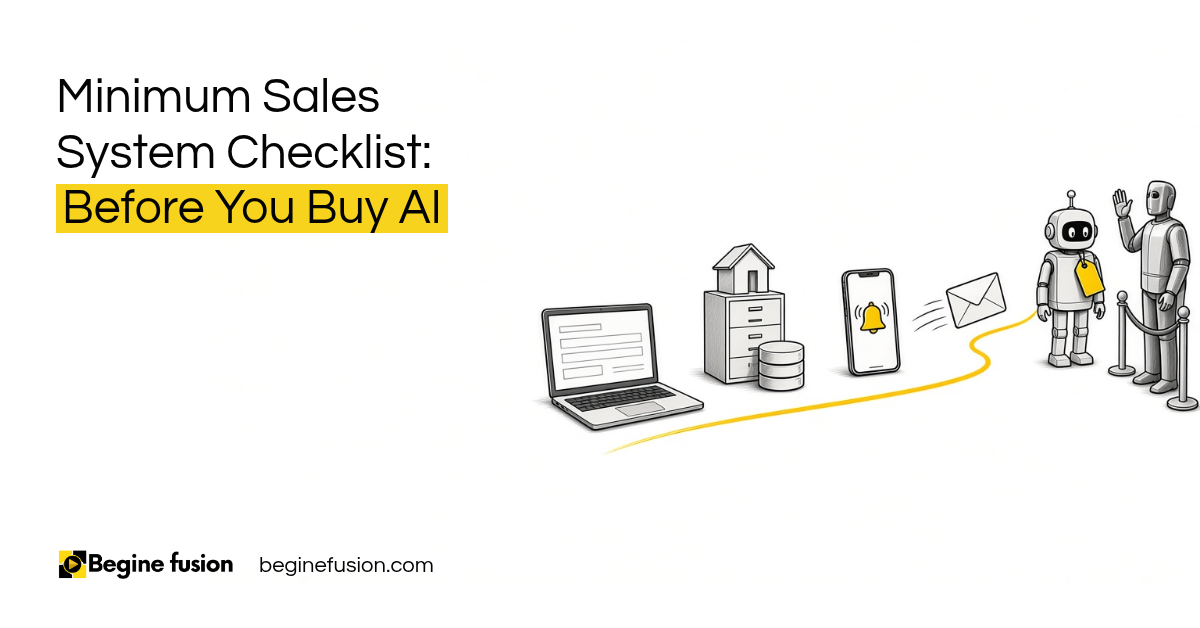 Minimum Sales System Checklist: Before You Buy AI
 The Company Vault Checklist: One Folder Every AI Tool Reads