
TL;DR
- Mapping finds more: when you go through process mapping, you find things that were hidden at the start.
- Every customer touch: booking, refunds, and what happens after the customer has booked.
- Inputs, outputs, handoffs: what comes in, what goes out, and which other teams hand something off.
- Close to the bottom line: AI goes where it gives you the most value, close to revenue.
- A pilot with one team: one function runs it first, and the rest of the company follows.
You may already know the challenge you want to fix. Mapping the process is how you find out if it is the biggest one.
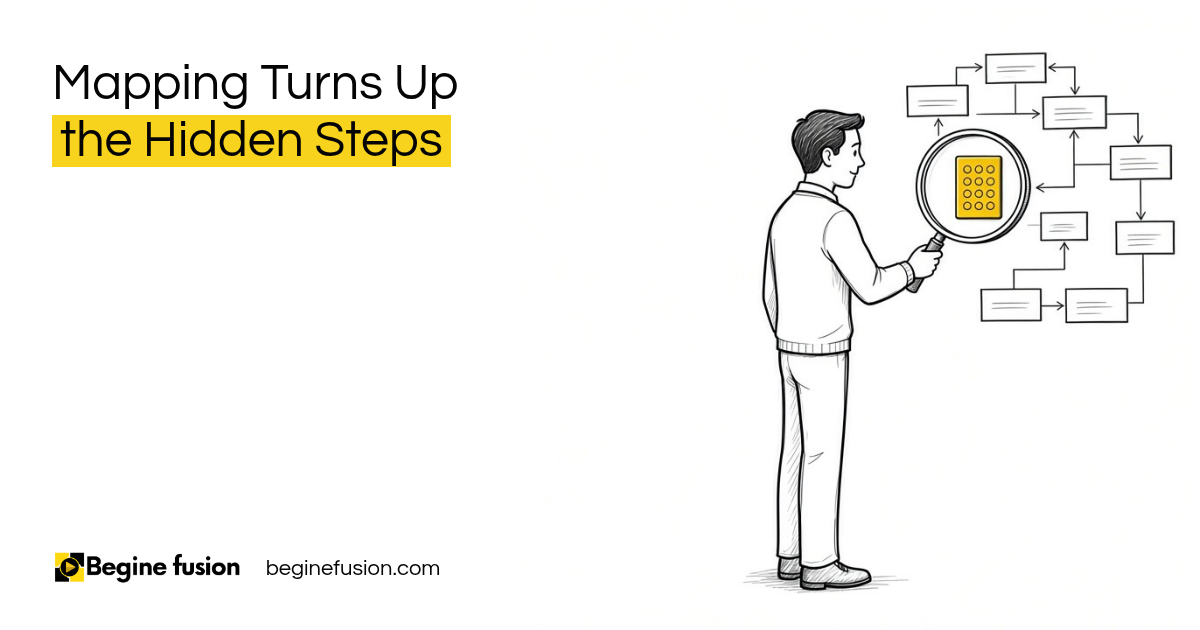
Mapping turns up the hidden steps
When we go through process mapping and understanding the business, we always find out things that were hidden at the start.
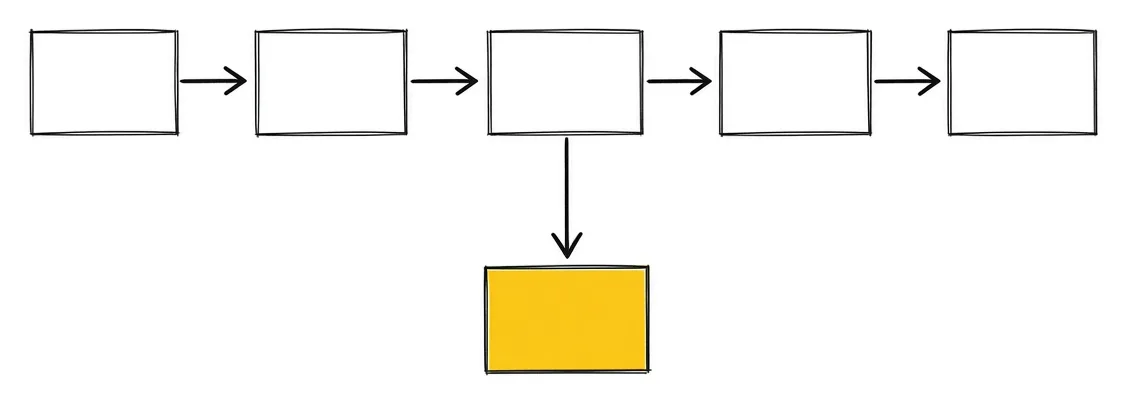
You were focused on this, but there is something even bigger somewhere else that we need to look at.
Every way you interact with customers
The process map covers the different processes you have within your business. That includes customer booking, a refund process if there is one, and what comes after the customer has booked.
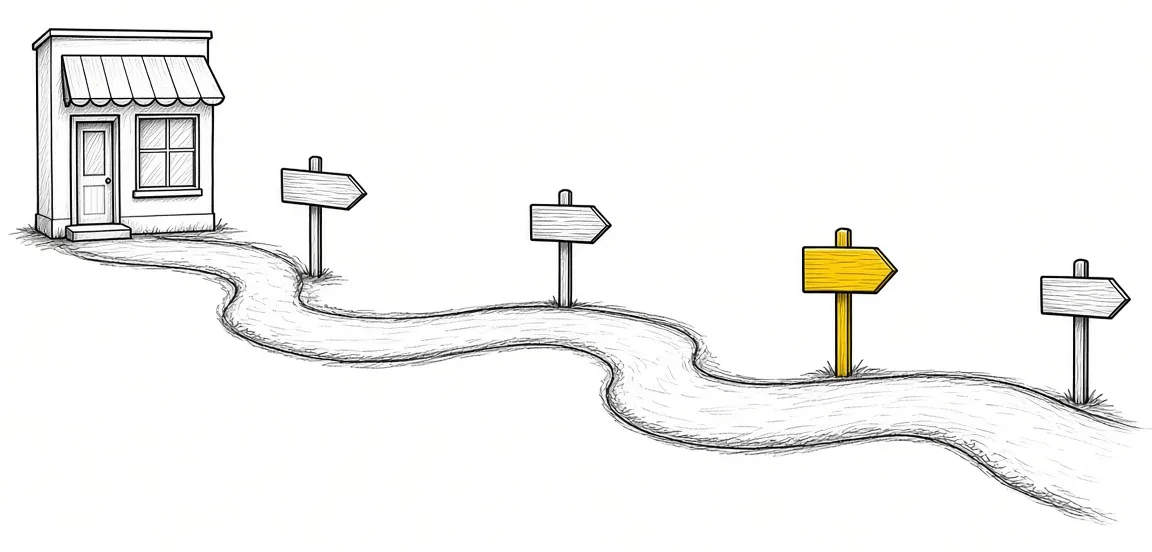
It takes in every way that you currently interact with your customers, and your entire operations. What exactly do you need to do in those different flows? Those are the things we map out, so there is a clear understanding of the different streams.
How it works today
Take onboarding as one process. How do you currently onboard people? What questions do you ask them? Do you have any vetting criteria? How do you get them in the first place?
Once that is written down, it can become a flow. Our post on explaining a process before you automate it covers why that step comes first.
Inputs, outputs and handoffs
For each team or function, the map shows exactly what their entire process is:
- What is the input?
- What is the output?
- Which other departments put something into what they do?
- Where do they need to hand something off?

That gives an overall view of what that team is working on. Based on that, you can identify where and how to plug in an AI solution.
AI close to the bottom line
The aim is to identify the critical places where AI can give you the most value. The closer it is to revenue and the bottom line, the sooner you can see returns on your AI investment.
The question to ask is this: if we fix that thing here, if we put AI in there, how does it impact the business overall? Our post on which steps get AI goes through how to choose.
A pilot with one team comes first
Your business has different arms. We pick one team or one function and run a pilot with them to see how it goes. After that, we can decide to roll out to other places within the company.

After it is deployed, we keep monitoring and maintaining it. Your business is evolving, and the models are evolving as well, so the process map gets updated along the line. Our post on starting with one AI agent covers the pilot in more detail.
Takeaways and next steps
- The challenge you think is biggest is where the mapping begins, and the map may show a bigger one.
- The map covers every way you interact with customers, from booking to what happens after.
- Each process is written down the way it works today, including the questions you ask.
- Each team has an input, an output and handoffs on the map.
- AI goes where it is closest to revenue and the bottom line.
- A pilot with one team comes before the rollout.
- The map gets updated as the business and the models change.
Common mistakes with process mapping
1. Fixing the first problem you noticed.
Why it fails: Something bigger somewhere else stays hidden.
Better approach: A process map first, so you can compare what you find.
2. Mapping one team on its own.
Why it fails: The handoffs to other departments get missed.
Better approach: The input, the output and every handoff written down.
3. Rolling out to the whole company at once.
Why it fails: Every team learns on the same mistakes at the same time.
Better approach: A pilot with one team before the rollout.
Frequently asked questions
What is process mapping?
Writing down, step by step, how a team does its work today: what comes in, what goes out, and who it gets handed to.
What should the map cover?
Every way you interact with your customers, such as booking, refunds and what happens after the customer has booked, plus your operations behind them.
Why map before choosing where AI goes?
Mapping usually turns up hidden steps, and sometimes a bigger problem than the one you started with.
Where should AI go first?
Where it gives you the most value, close to revenue and the bottom line, so the returns come quickly.
Do we have to do the whole company at once?
A pilot with one team or function comes first. After the pilot, you can roll out to the rest.
Glossary
- Process map
- A step-by-step picture of how work moves through a team, including inputs, outputs and handoffs.
- Handoff
- The point where one team passes work or information to another.
- Pilot
- A first rollout with one team or function before the rest of the company.
- Bottom line
- The profit a business keeps after its costs.
 The Back-Office AI List for Owners Whose Clients Want a Person
 AI Readiness Checklist: 7 Questions Before You Build