
What Is Digital Adoption?
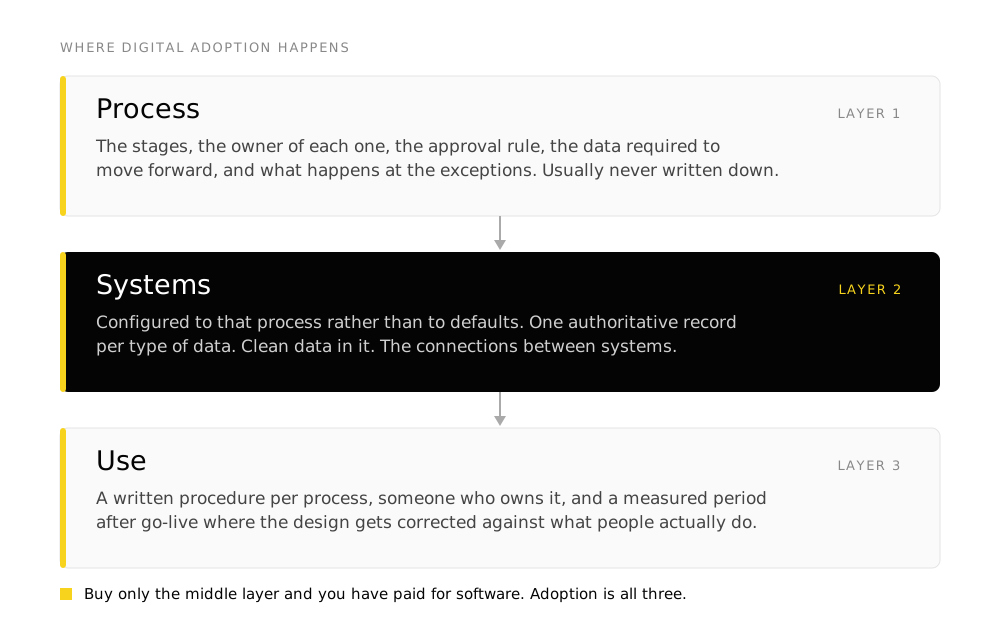
Digital adoption is the point at which software an organization owns is actually used, by the people it was bought for, to do the work it was bought to do.
TL;DR
- The short definition. Software you already pay for, carrying the work it was bought for, without a spreadsheet running alongside it.
- It is not the software category of the same name. Digital adoption platforms are tooltip overlays. They solve one narrow failure and it is not the common one.
- It is not digital transformation. Transformation changes what the business does. Adoption changes how the work gets done inside it.
- Six areas have to be dealt with, in order. Process, system of record, data, integration, governance, then adoption work.
- The licence is the cheapest part. Process design, data work and the period after go-live take most of a real budget, and they are the first three things cut.
- It comes before AI. An agent needs a defined process to run against and a record it can trust. Those are the two outputs of adoption work.
That definition is deliberately narrow, because the gap it describes is where most technology spending goes. A company buys a CRM. It is configured. Training happens. Eighteen months later the sales team keeps its real pipeline in a spreadsheet, and the CRM holds a partial copy that nobody trusts for reporting. The licence is paid. The software works. Adoption did not happen.
The definition you will find elsewhere, and why it is not this one
Search this term and most of what comes back is written by digital adoption platform vendors. In that literature, digital adoption means in-application guidance: an overlay on top of your CRM or HR system that walks a user through a screen with tooltips and prompts. Gartner tracks this as its own software category, and the products in it are real and sometimes useful.
That definition solves for one failure mode, which is a user who does not know which button to press.
The broader definition, and the one used here, covers the whole distance between buying software and getting value from it: the process the software is supposed to carry, the system built to that process rather than to its defaults, the data moved into it, the connections to everything else, the people operating it, and the period after go-live where the design gets corrected against what people actually do.
The distinction that matters most
Digital adoption is not a training problem with a technology component. It is a process design problem with a training component. Teams revert to spreadsheets because the spreadsheet fits how the work runs and the system does not.
What digital adoption is not
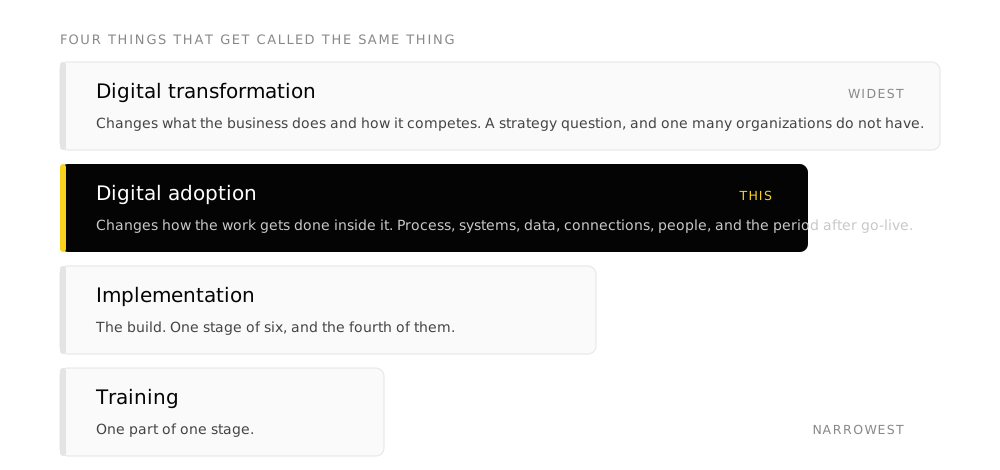
Transformation changes what a business does and how it competes. Adoption changes how the work gets done inside it. Transformation is a strategy question that may not apply to your organization at all. Adoption applies to everyone who has bought software.
Implementation is the build. It is one stage, and on the engagements we run it is the fourth of six. A configured system delivered against an undefined process reproduces the same manual workarounds in a more expensive place.
Training transfers instructions. Adoption requires that the instructions describe something a person would choose to do. If the new process is slower than the old one for the person doing it, no amount of training holds.
Onboarding gets someone through their first session. Adoption is about the ninth month.
What digital adoption covers in practice
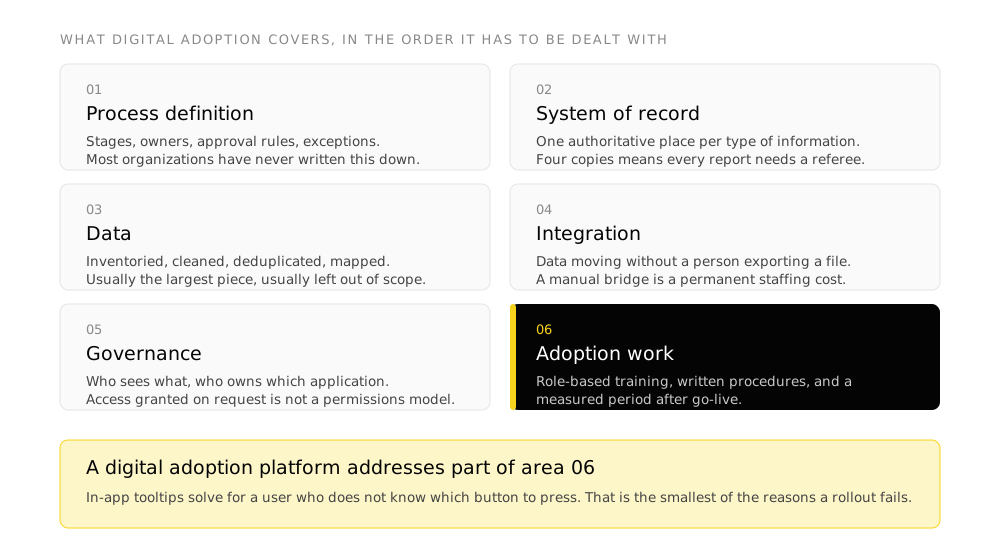
Process definition. What the stages are, who owns each one, what the approval rule is, what data is required to move forward, what happens at the exceptions. Most organizations have never written this down. Two people run the same task two ways, both defensible, because nobody ever settled it.
System of record. One place that is authoritative for each type of information. When a client record exists in the CRM, the accounting system, a shared drive folder and somebody’s inbox, every report needs a person to reconcile it before anyone can trust it.
Data. Inventoried, cleaned, deduplicated, mapped, migrated. This is usually the largest single piece of work and the one most often left out of scope, and it is the reason a technically correct system gets abandoned. People do not use a system whose data they know is wrong.
Integration. Data moving between systems without a person exporting a file. The gap between two systems is where errors live, and a manual bridge across it is a permanent staffing cost.
Governance. Who can see what, who owns which application, what the administrative procedure is. Access granted ad hoc as people asked for it is not a permissions model, and it becomes a question you cannot answer when somebody asks it formally.
Adoption work. Role-based training, a written procedure per process, an administrator handbook, and a measured period after go-live where usage gets checked and the workflow gets corrected. This is the part that is routinely cut when a budget tightens, and it is the part that decides whether the rest was worth doing.
Where the money is actually spent
The licence is the cheapest part. Process design, data work and the period after go-live consume most of a real digital adoption budget, and they are the three things most likely to be descoped.
What it looks like when it has not happened
These are the recurring patterns. If several are familiar, the problem is adoption rather than software selection.
- The work happens in a spreadsheet somebody maintains by hand, alongside software bought for that exact job
- The same record exists in four places and nobody can say which one is right
- Reporting requires a person to reconcile sources before anyone will act on the numbers
- Data moves between systems by export, edit and re-import, on a schedule that depends on someone remembering
- Nobody can produce a list of who has access to what
- A rollout happened, training happened, and within six months half the team was back on the old method
Digital adoption and AI
Agents and automated workflows run against your data and your process. Where the process is undefined and the records are scattered, an agent produces confident wrong answers faster than a person could produce them by hand.
This is the practical reason digital adoption comes first. It is not a sequencing preference. An AI system needs a defined process to execute against and a trustworthy record to read from, and those are the two outputs of digital adoption work.
Individual staff using AI for research and drafting is a separate question and does not wait on any of this.
Common mistakes
- Buying the platform first. The tool is selected, then the process is bent to fit its defaults. Define how the process should run, then choose the tool that carries it.
- Treating data migration as an IT task. It gets scheduled as a weekend job and lands as a dump of whatever was in the old system. Users decide within a week whether the data is trustworthy, and that judgment is difficult to reverse.
- Scoping the engagement to go-live. The contract ends the day the system turns on, which is the day the real problems start appearing. Scope and pay for the stabilization period in the same agreement.
- Training everyone the same way. One session for the whole company covering every module. Most of it is irrelevant to most of the room. Train by role, and train administrators separately.
- Skipping the reason the last rollout failed. A new system goes in against the same conditions that killed the previous one. Those conditions are usually still in the building.
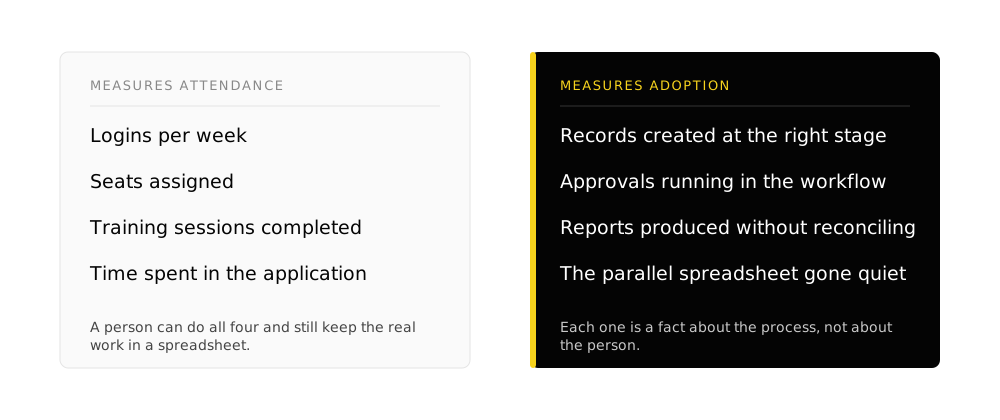
- Measuring logins. Usage reports show people signing in, which gets read as adoption. Measure whether the process is running in the system.
- Leaving governance until later. Permissions get granted on request and the ownership question is deferred. Retrofitting a permissions model means revisiting every record.
Frequently asked questions
What does digital adoption mean for a business?
It means the software you already pay for carries the work it was bought for, without a spreadsheet running alongside it and without a person reconciling the output. Concretely: defined processes, one authoritative system per type of record, clean data, connected systems, and a team that operates it without external help.
Is digital adoption the same as digital transformation?
No. Transformation changes what the business does and how it competes. Adoption changes how work gets done inside it. Adoption is smaller in scope, faster, and applies to organizations that have no transformation ambition at all.
How long does digital adoption take?
The assessment stage runs two to six weeks depending on scope. A single systems build runs ten to nineteen weeks. A full environment across several functions runs twenty to forty weeks. The stabilization period after go-live is agreed before the build starts and is typically ninety days.
Do we need new software?
Often not. Most of the value is in the process design and the data work rather than in the licence. A significant share of the organizations we assess are using tools they already own at a fraction of their capability, and the outcome is a reconfiguration rather than a replacement.
Who owns digital adoption inside a company?
Someone with authority over the process, not only over the technology. Where it is owned by IT alone, the process design questions do not get settled, because IT cannot decide who approves a discount or which stage a deal moves at.
What is a digital adoption platform?
A category of software that overlays your applications with in-app guidance, tooltips and walkthroughs. It addresses the narrow problem of a user not knowing which button to press. It does not address undefined processes, scattered data or unconnected systems, which is where most adoption failures come from.
Can you measure digital adoption?
Yes, and it should be measured against the process rather than against logins. The measures worth tracking are whether records are created at the correct stage, whether approvals run inside the workflow, whether reports come out without manual reconciliation, and whether the parallel spreadsheet has stopped being updated.
Glossary
- Digital adoption
- The state in which software an organization owns is used by the people it was bought for, for the work it was bought to do.
- Digital adoption platform (DAP)
- Software that overlays other applications with in-app guidance and walkthroughs. A narrow tool inside the broader discipline.
- System of record
- The single application treated as authoritative for a given type of information. Everything else holds a copy.
- Process map
- A written account of how a piece of work runs, showing stages, owners, decision points, handoffs and exceptions. Current-state maps describe how it runs now; future-state maps describe how it should run.
- Solution architecture
- The decision about what each application is for, how they connect, and where each type of data lives.
- Data migration
- Moving existing information into a new system, including the inventory, cleaning, deduplication and mapping work that precedes it and the validation that follows it.
- Governance
- The permissions model, application ownership and administrative procedures that determine who can do what.
- Stabilization
- The defined period after go-live for issue resolution, workflow correction and adoption monitoring.
Key takeaways
- Adoption is the distance between paying for software and getting work out of it. The licence closes none of that distance.
- The software category called digital adoption solves the narrowest failure in the set. Do not let it define the problem.
- Six areas, in order: process, system of record, data, integration, governance, adoption work. Skipping one does not save time, it moves the cost later.
- People abandon systems whose data they know is wrong, and they decide that within the first week.
- Measure the process, not the logins. Signing in is attendance.
- Anything you intend to do with AI runs on the process and the records that adoption work produces.
Where to go next
If you recognised several of the patterns above, the next question is which layer your problem sits in. A process that was never defined, a system built to defaults, data nobody trusts and a team that was never enabled are four different problems with four different fixes, and they are usually mistaken for each other.
How digital adoption works sets out the mechanism stage by stage. How to drive digital adoption covers the part after go-live, which is where most of the failures are. Our six-step approach is how we run it.