
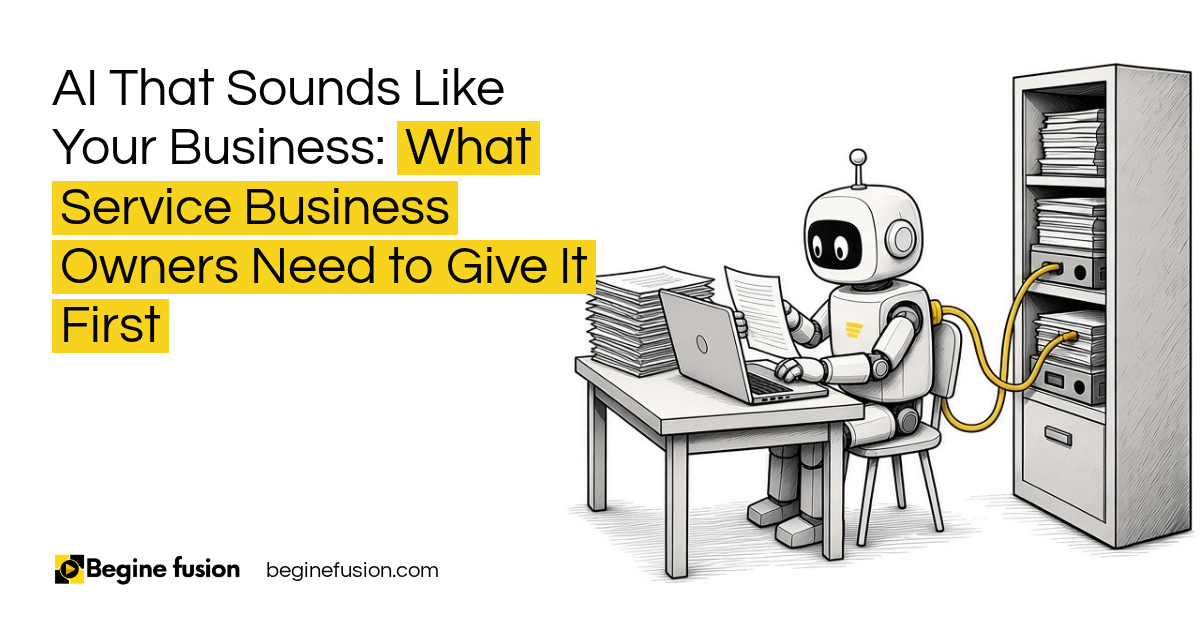
TL;DR
- AI output sounds generic: the AI has no context about your business, so it falls back on general context.
- Everybody has access to the same AI: the edge is the business context you build around it.
- That context: your brand voice, your clients, your frameworks, your methodology and your templates, kept in one place the AI works from.
- Every chat outside that place starts from zero: you end up copying and pasting into it again.
- Once it is set up: you wake up in the morning and you have things to review.
A lot of people that use AI tell me the same thing. What comes out does not sound like them.
They have not created a system that gives the AI enough context. It is still very general. That is the whole reason it sounds the way it does.
Why does AI output sound generic?
When you go into a chat and ask for something, the AI has no idea who you are. It does not know your brand, your clients or how you do the work.
So it answers from a general context. If you use AI in that general context, that is exactly what you are going to be getting all the time.
It has to be specific to your business and specific to what you do.
Key point: AI with no business context answers from general context. The output sounds like everybody else because everybody else is asking the same general AI.
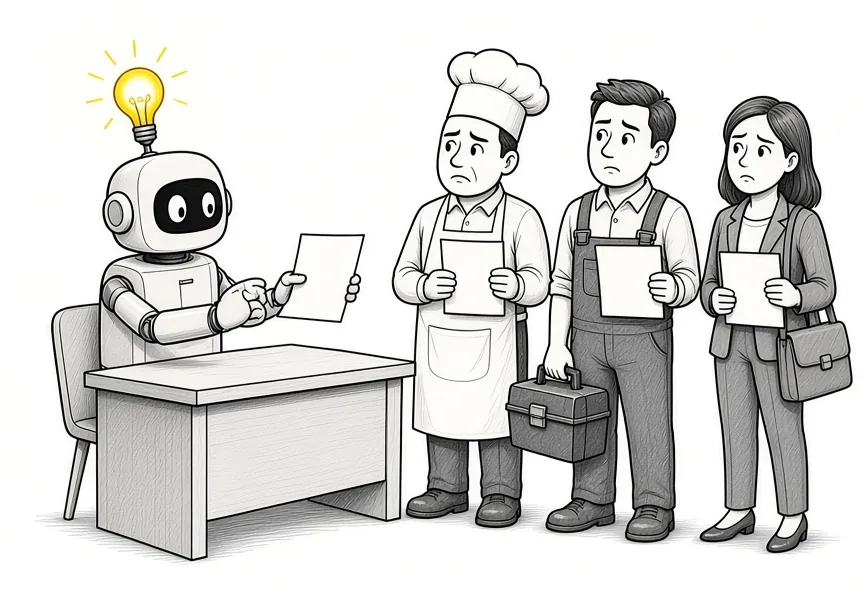
What does fighting with AI look like?
I hear this a lot: “Anytime I go and use a GPT or I go and use Gemini, it does not understand me. So I have to go and copy something and put it there.”
If you are not working in your business context, you will be fighting with AI all the time. You correct it. It says sorry, I apologize, I don’t know how I missed that. Then it does it again.
I wrote about why AI gets worse after you correct it. A lot of that comes back to missing context.
Your context is spread across different tools
People have different contexts in different models. Some of it is in one chat and some of it is in another app. It is not all in one.
So people end up copying something from one place and pasting it into another. Every chat that happens outside your business folder, you are losing your business context.
What is business context, in plain terms?
Business context is everything the AI needs to know to work the way your business works. When we build it, it covers:
- Your knowledge wiki. All your clients, your methodology, your frameworks, the templates and the sessions. This is where the AI is going to be learning from.
- Your brand voice. This is where you lock in how your business sounds.
- Your industry. If your industry is regulated, the content you put out has to be in line with the regulation.
- You. Your bio, your resume, so the AI has context about who you are personally as well.
- Your tools. The connections to your email and your CRM, so it can act on real information.
The wrong way of using AI is using it inside lots of different platforms, each one with a piece of your business.

How do you give AI your business context?
The knowledge base is the part I cannot overemphasize. If you do not get that right, every other thing you are trying to do with AI will not work.
Here is how we set it up when we build an AI system for a business:
- We gather what the business already has. Proposals, templates, frameworks, past client work, the brand guide.
- We write down the brand voice. How you talk, the words you use, the words you never use.
- We put it all in one place the AI works from. I covered that in my post on one folder for your business context.
- We connect the tools, your email and your CRM, so the AI is working with your real information.
- We test the output against what you would have written yourself, and keep adding to the knowledge base as the business changes.
That whole setup is the system. I broke down the difference between a tool and a system in tools vs systems.
Key point: The AI works from one business folder with your voice, clients, methods and templates. Every chat outside it starts again from general context.
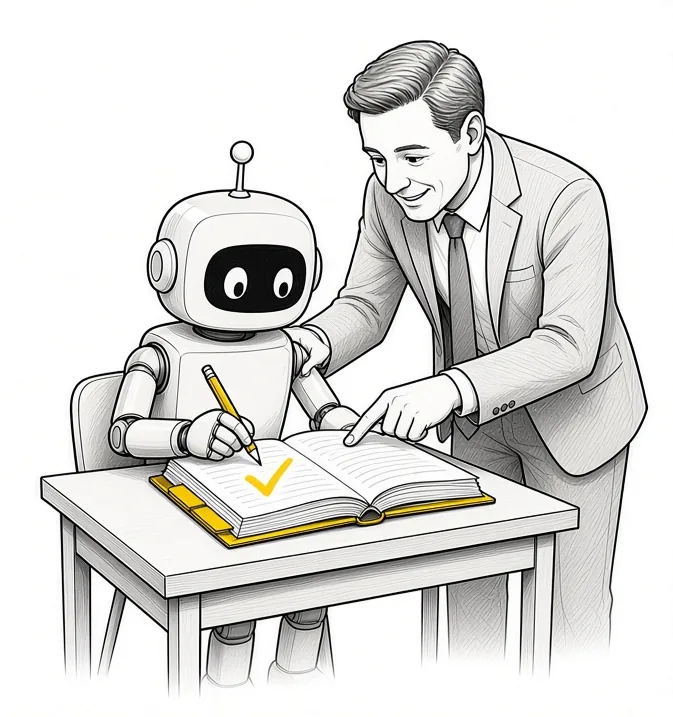
What changes once the AI has your context?
The AI is not going to pull something from a generalistic point of view anymore. It is working within the context of your business, and that right there is the edge.
Everybody has access to AI and ChatGPT. At the end of the day, a lot of them are still not doing this.
The mistakes you would normally see with general AI, you stop seeing those things. The system has your business context, your frameworks and your methodologies, and it has the tools it needs to connect to your email and your CRM.
So you just wake up in the morning and you see, okay, I have things to review. A request for a meeting that came into your inbox just gets booked. There is no need for you to review that.
Key point: The AI model is the same for everybody. What makes the output yours is the business context it works from.
Takeaways and Next Steps
If I was looking at how your team uses AI this week, this is what I would check:
- How many different AI tools and chats your team is using, and what each one knows about the business.
- Whether your brand voice is written down anywhere the AI can read it.
- Where your templates, frameworks and past proposals are kept, and whether the AI can reach them.
- How often somebody is copying and pasting the same background into a new chat.
- Whether your industry rules are written down for the AI, if you are in a regulated industry.
If the answers are scattered, that is where I would begin. Our AI operating system is how we build this for a business, and FusionMap is where we map it out first.
Common Mistakes
1. Switching AI tools to fix generic output
- Why it fails: Every model answers from general context when it knows nothing about you. A new tool gives you the same problem.
- Better approach: We build the business context once and let the AI work from it.
2. Pasting the background into every new chat
- Why it fails: Every chat outside your business folder loses the context, and somebody spends their day copying and pasting.
- Better approach: One business folder the AI reads from every time.
3. Leaving the brand voice in somebody’s head
- Why it fails: The AI cannot sound like you if nobody wrote down how you sound.
- Better approach: A written brand voice with the words you use and the words you never use.
4. Skipping the knowledge base and going straight to agents
- Why it fails: If you do not get the knowledge base right, every other thing you try to do with AI will not work.
- Better approach: Knowledge base first. Clients, methodology, frameworks, templates. Then the agents.
5. Ignoring industry rules
- Why it fails: In a regulated industry, general AI can put out content that is out of line with the regulation.
- Better approach: The regulation goes into the business context, so the AI checks against it.
6. Correcting the AI over and over in the same chat
- Why it fails: You get “sorry, I apologize” and the same mistake again, because the context was never there.
- Better approach: We fix the context and run it again.
Frequently asked questions
Why does AI writing sound generic?
AI writing sounds generic because the AI has no context about your business, so it answers from general context. Once it has your brand voice, clients, methods and templates, the output changes.
What is business context for AI?
Business context is everything the AI needs to work the way your business works: your brand voice, your clients, your frameworks, your methodology, your templates, your industry rules and the tools it connects to.
Will a better AI model fix generic output?
A better model on its own will still sound generic if it knows nothing about your business. Everybody has access to the same models, so the business context is the edge.
How do I make AI write in my brand voice?
The brand voice gets written down, with the words you use and the words you never use, and kept in the business folder the AI works from. Then we test the output against what you would have written.
What is a knowledge base for AI?
A knowledge base is the one place that holds your clients, methodology, frameworks, templates and past sessions, so the AI learns from your business instead of from general context.
Why does AI keep apologizing and making the same mistake?
It keeps making the same mistake because the context it needs is missing. Correcting it in the chat does not add the context, so the fix is to build the business context it works from.
Do I need to connect my email and CRM?
Connecting your email and CRM lets the AI act on real information, like booking a meeting request that came into your inbox. Without those connections it can only write.
Key terms
- Business context
- Everything the AI needs to know to work the way your business works, from brand voice to clients to industry rules.
- General context
- What an AI falls back on when it knows nothing about you. It produces the same kind of output for everybody.
- Knowledge base (knowledge wiki)
- The one place that holds your clients, methodology, frameworks, templates and sessions for the AI to learn from.
- Brand voice
- How your business sounds in writing, written down so the AI can follow it.
- Business folder
- The single place the AI works from, so every chat starts with your context.
- Connected tools
- Your email, CRM and other systems the AI can read from and act in.
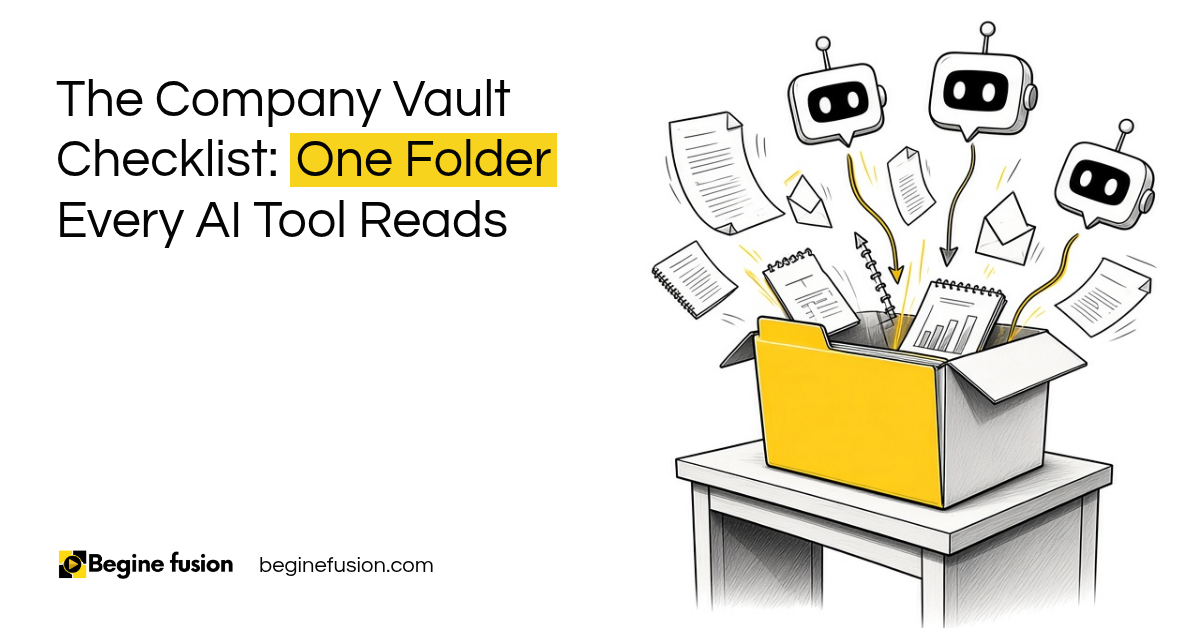 The Company Vault Checklist: One Folder Every AI Tool Reads
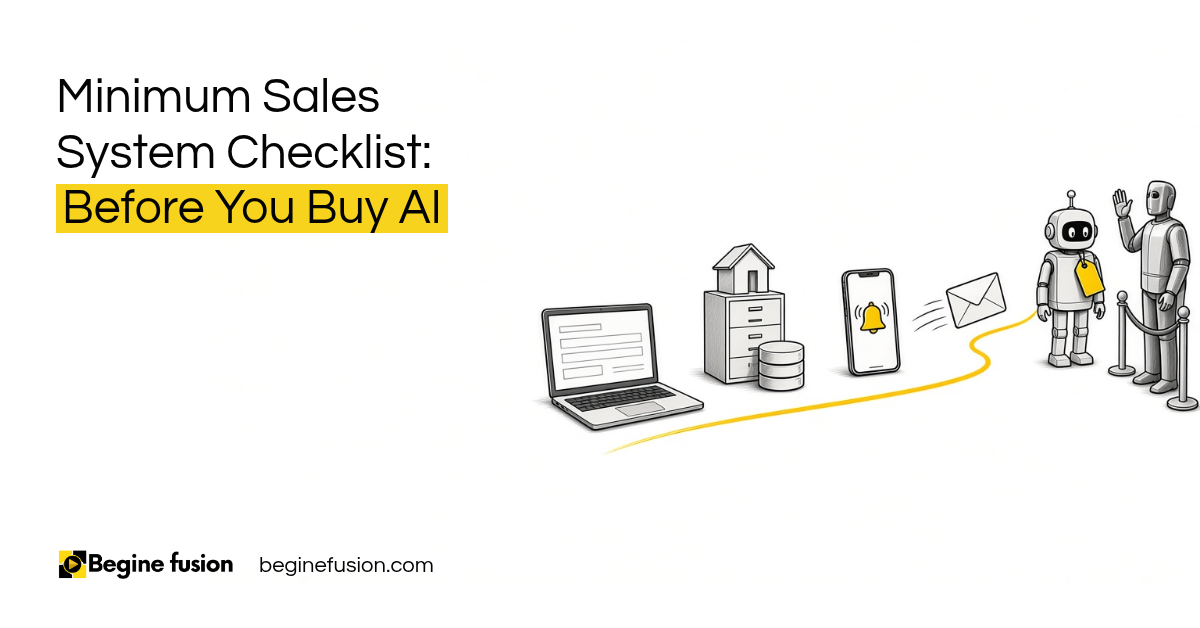 Minimum Sales System Checklist: Before You Buy AI