
TL;DR
- The request: a client asks for a setup, and we tell them the best way it should be built.
- The effect: some requests would affect other parts of the system, so we say what they would affect.
- The details: keep each detail where it belongs and pull what you need through reports.
- Show them: advise on the best way, then show them how to use it.
- Less back and forth: clear advice moves the project forward faster.
When we build a system for a client, the client will request something. We are the ones that will tell them the best way it should be implemented. That is my approach. They know their business. We know how the system works and where its limits are.
A request is where the advice begins
A client asks for a detail to go in a certain place. The request tells you what they need. The way to build it is the part we bring.
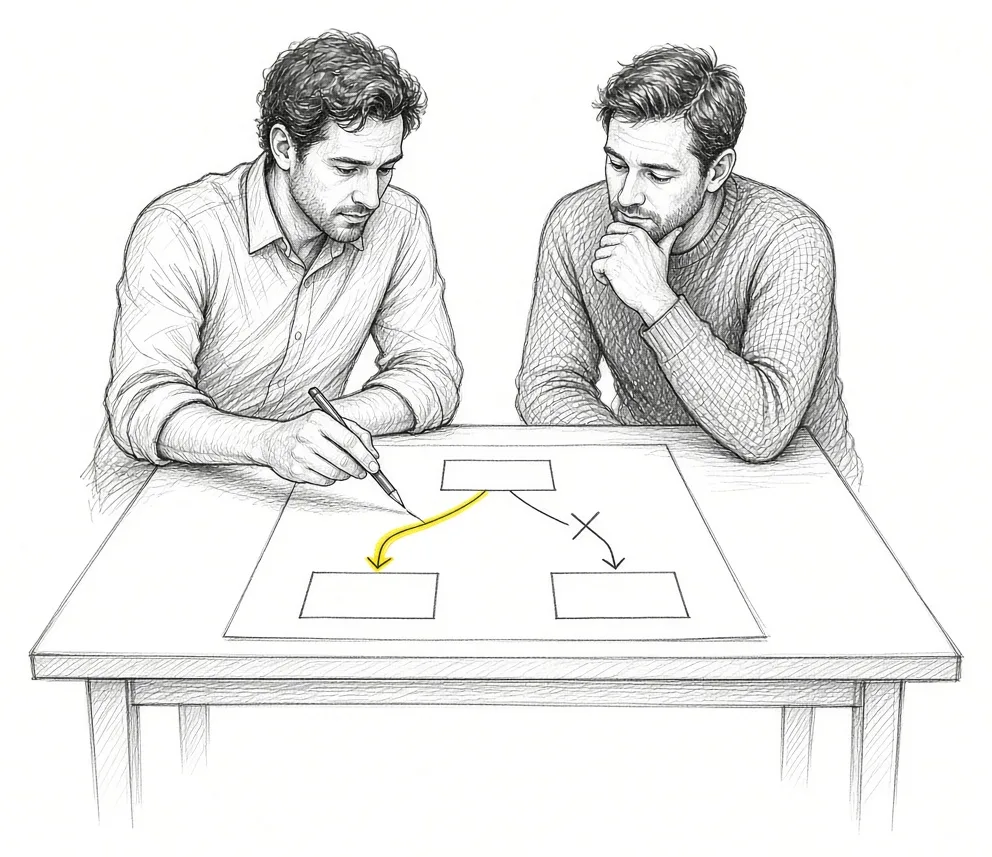
Based on what you requested, this is the best way to have it built. That is the conversation. Our post on process mapping that finds the hidden steps covers how mapping shows where each detail fits.
Say what their version would affect
Every system has limits, such as how many subforms you can create. If we put a detail where the client asked, it can affect other parts of the system.
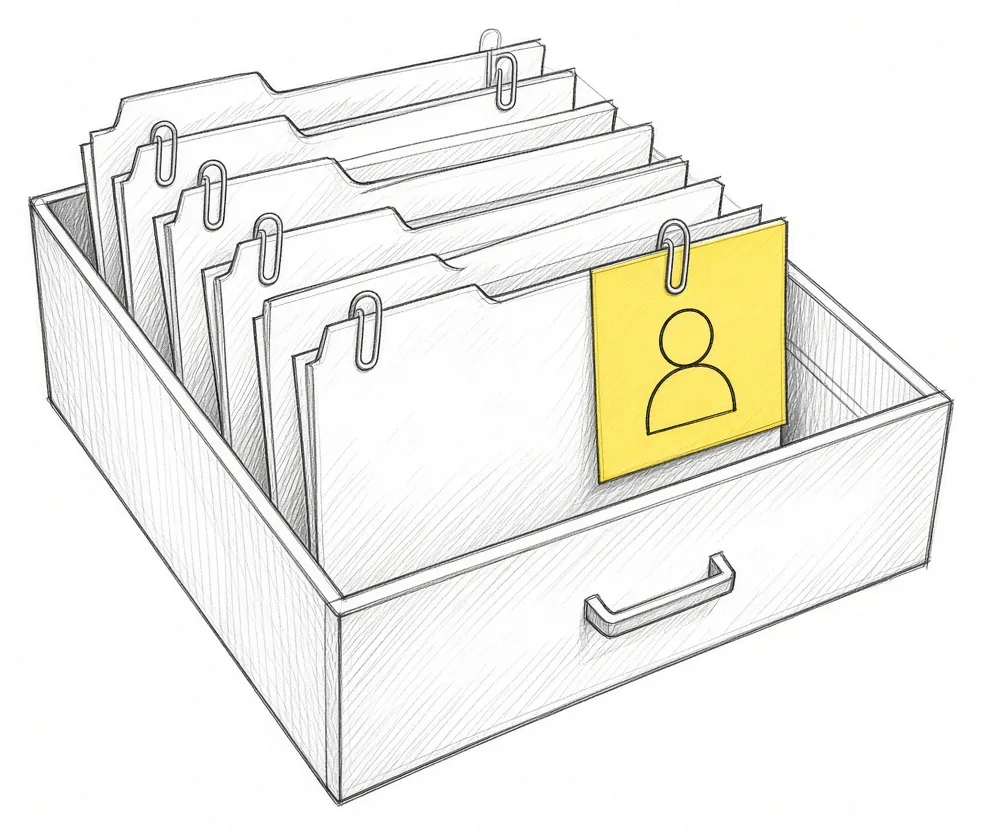
We go back to them and say: this is the best way we have to implement this. Putting it there is going to affect these other parts, so we keep it here instead. The details that change with each piece of work stay inside that piece of work. When a new one starts, it gets its own record with its own details.
Keep the details where they belong
Each record is linked to the client it belongs to. Any information you need, you can run reports to get, or open the record and see all the details under it.

A reporting dashboard lets the client pull out the data they need across all of it. The blueprint behind it has to function the best way possible. Our post on your CRM as the single source of truth covers why linked records matter.
Advise, then show them how to use it
We advise them on the best way it should be implemented, and we show them how to use it. I want my team to feel free to give that advice, instead of feeling put in a box where nothing gets done.

The reason for this approach is simple. I want to reduce the back and forth with the client and make progress as fast as possible. We confirm what we need to confirm and build the rest on the information we already have. Our post on training so your team runs the system covers the handover.
Takeaways and next steps
- A client request tells you what they need. The way to build it is your advice.
- Every system has limits, so say what their version would affect.
- Keep each detail inside the record it belongs to, and link records to the client.
- Use reports and a dashboard to pull the data out.
- Advise, show them how to use it, and cut the back and forth.
Common mistakes with client build requests
1. Building every request exactly as asked.
Why it fails: One change affects other parts of the system later.
Better approach: Tell them the best way it should be built and what their version would affect.
2. Copying details into many places.
Why it fails: Records drift apart and reports stop matching.
Better approach: Keep each detail in the record it belongs to and run reports.
3. Advising without training.
Why it fails: The client has the better setup and struggles to use it.
Better approach: Show them how to use it as part of the advice.
Frequently asked questions
Should a consultant build exactly what the client asks for?
The request tells you the need. The consultant's part is to tell the client the best way it should be built.
How do you explain a different approach to a client?
Say what their version would affect in the system, then show where you would keep it instead.
How do clients get the information they asked for?
Through reports and a dashboard, or by opening the linked record.
Why does this speed up a project?
Clear advice cuts the back and forth, so progress moves faster.
What comes after the advice?
Show the client how to use what you built.
Glossary
- Subform
- A table inside a record that holds repeating rows of details.
- Linked record
- A record connected to another, such as a piece of work connected to its client.
- Reporting dashboard
- A screen that pulls data from many records into one view.
- Blueprint
- The set of stages and rules a record moves through in a system.


 Minimum Sales System Checklist: Before You Buy AI
 The Company Vault Checklist: One Folder Every AI Tool Reads