
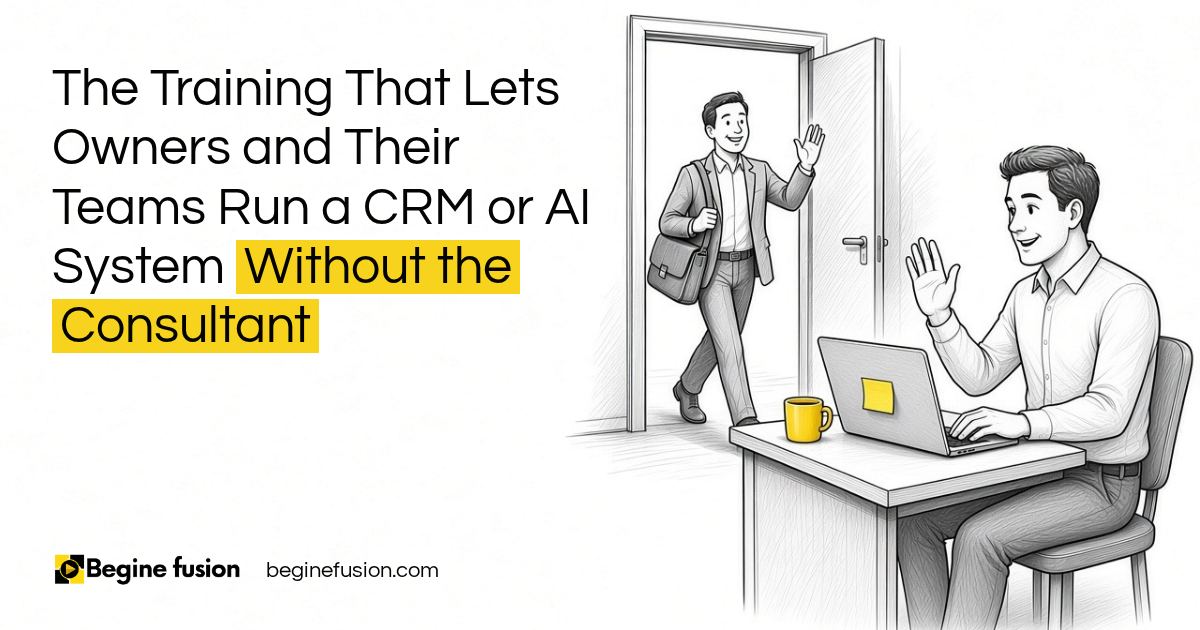
TL;DR
- We are not trying to make people too dependent on us: some companies do that so they can stick around and run things.
- Training comes with every implementation: the team can run the system day to day by themselves.
- We train the admin first: then there is somebody inside who can help the users. After that we train the users on the new tools and the new process.
- Admins learn to tweak things on the fly: if something major has to change, we come back in.
- Without calling anybody: the point is a team that can change a field or export its own data.
A prospect asked me what happens after we finish the setup. Do they need us forever?
I said it plainly. We are not trying to make people too dependent. I think some companies do that because they want to stick around and run things. The idea for us is that people can run things themselves.
What does it look like when a team depends on its consultant?
It looks like a business that cannot change a field in its own system without sending an email and waiting.
On one data project, an organization had to go through one outside person every time they needed their own data.
When we moved that data into their new system, I told them this was going to be the last time anybody in the history of the organization had to do this. Anytime from now, if you need your data, you just go there and export it.
Key point: If your team has to ask somebody outside the business for its own data or a simple change, the system is not fully yours yet.

Who gets trained, and in what order?
We do two levels of training.
The admin goes first
Depending on who is going to be the admin internally, we do a separate admin training for them. We show them how to move things around in the back end.
The admin training comes first so that you have somebody internally who can help the users when they start their own training. That person does not have to be in IT. It could be an operations manager.
Then the people who use it every day
Then we do the end user training, for the standard users of the platform. We train them on how to use the platform day to day, and on the new process as well.
How long the training runs depends on how comfortable the team is with technology. It happens before go-live, so people are ready on the day the system switches on.
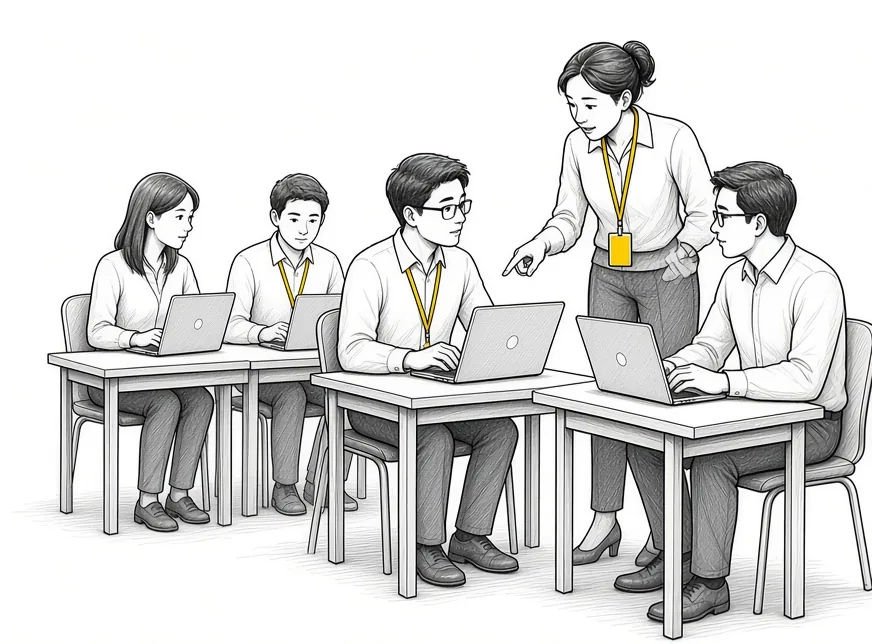
What can the team change without us?
The training might not be a detailed, month-long program. It is enough to let them run the system.
That means the admin can tweak things on the fly. If a field needs changing or a new user needs access, your own people can handle it.
I say this on our calls with owners. We do not want you to be so dependent on us that you cannot even change a field.
Key point: We set the system up so the regular day to day running of the process stays inside your team.
When do we still come back in?
If there is a big or major update, or the whole process needs an overhaul, then you can call us back. We come in and do that while your team keeps doing its work.
There is also a stabilization period after go-live. That time is there to get you comfortable using the system, so you are depending on the system and not on us.
And if you would rather we run things day to day, we can. That is a choice you make, and the training is still part of the build.

How the work runs differently
Before, every change and every data request went through somebody outside the business. After the build, everyday changes stay with the admin inside, and the people who use the system every day know the new process too.
Our published case studies describe the same handover:
- On the AI client profiling engine, we trained the team on running and reviewing AI outputs, documented the system, and backed it with a post-delivery support window.
- On the AI sales intelligence build, we delivered process documentation and a recorded training session on running the agents and reviewing their outputs, and the rep operates independently after training.
- On the AI estimating agent, the handover step was walking the team through the customer record and the follow-up.
I also wrote about why going live is only part of the work in implementation versus adoption.
Takeaways and Next Steps
If I was looking at a system you are about to buy, this is what I would ask:
- Who inside your business will be the admin, and when is their training?
- Will the people who use it every day be trained on the new process as well as the tool?
- Can your team change a field or export its own data without calling anybody?
- What counts as a major change that brings the consultant back in?
If you do not have answers yet, that is where I would start. FusionBuild includes the training and handover, and Managed Operations is there if you want us to run things day to day. I covered owning your setup in more depth in vendor dependency versus owned orchestration.
Common Mistakes
1. Treating training as an extra
- Why it fails: The system goes live and nobody inside knows how to change it.
- Better approach: We build the training into the implementation from the start.
2. Training the users before the admin
- Why it fails: Users get stuck and there is nobody inside to help them.
- Better approach: We train the admin first, so the users have somebody internal to ask.
3. Teaching the tool but skipping the process
- Why it fails: People learn which buttons to press and keep running the old process around it.
- Better approach: End user training covers the new process together with the platform.
4. Calling the consultant for every minor change
- Why it fails: Minor changes wait in somebody else’s queue, and the bill grows.
- Better approach: The admin handles the day to day changes, and the consultant comes in for major ones.
5. Data only one outside person can get out
- Why it fails: Every report or export turns into a request and a wait.
- Better approach: We make the export something the team runs themselves.
Frequently asked questions
Will I depend on the consultant after a CRM or AI implementation?
You should not have to for the day to day. We train your team so they can run the system themselves, and we come back in only for major changes or if you choose to have us run things.
Who should be the admin for our new system?
Somebody internal who will look after the system. It does not have to be an IT person. An operations manager can do it.
Why train the admin before the other users?
So there is somebody inside the business who can help the users when they start using the system.
What does end user training cover?
How to use the platform day to day, and the new process the system now runs.
What can my team change without outside help?
Regular changes such as fields, steps and user access. A major update or a full process overhaul is when we come back in.
Can Begine Fusion run the system for us instead?
Yes, if you prefer that. It is a choice, and your team still gets trained either way.
Key terms
- Admin
- The person inside the business who manages a system's settings, fields, users and changes.
- End user
- A standard user who works in the system day to day.
- Admin training
- A separate session that shows the admin how to change things in the back end.
- Go-live
- The day a new system switches on for real work.
- Stabilization period
- The time after go-live when the team gets comfortable and early issues get fixed.
- Handover
- The point where the team takes over running the system from the people who built it.
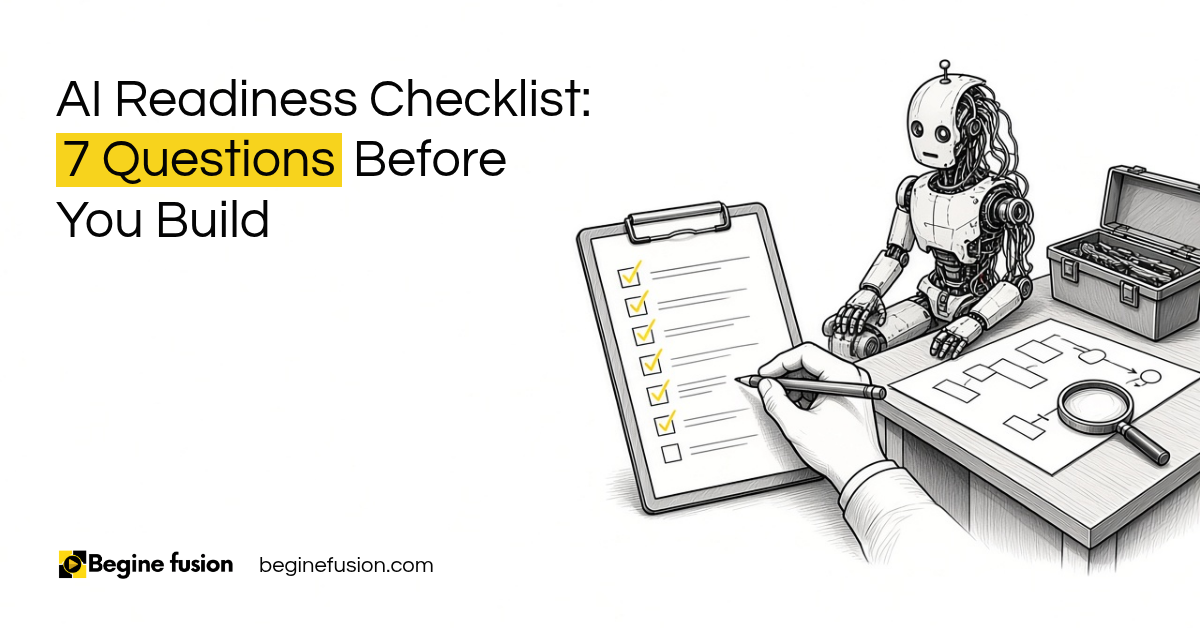 AI Readiness Checklist: 7 Questions Before You Build
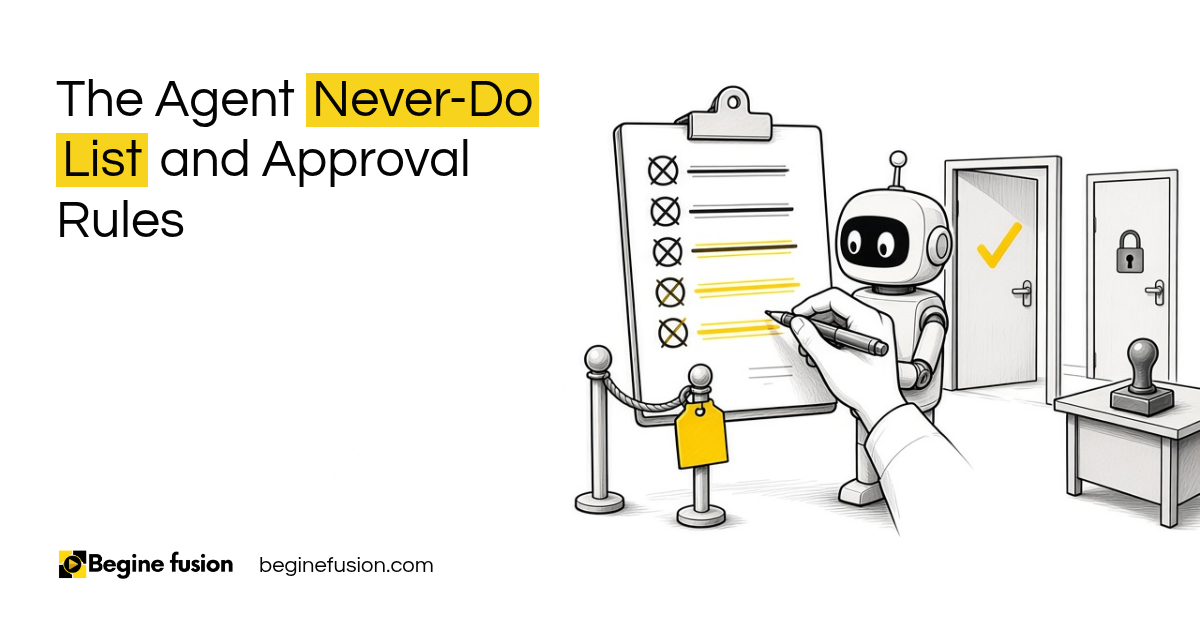 The Agent Never-Do List