
TL;DR
- The pattern: your team increasingly depends on you for decisions and guidance because there is no system in place.
- What it looks like: somebody needs to send a proposal and asks which template to use. A question about an existing customer comes back to you.
- The fix: we bring out what is in your head, map it out, and make it a repeatable system that supports your business.
- The result: team members run what they get from a client through that system, using the same intelligence to get the same results.
- The point: AI is one part. The systems need to be in place.
This is for entrepreneurs, solo operators and people running a business with a team.
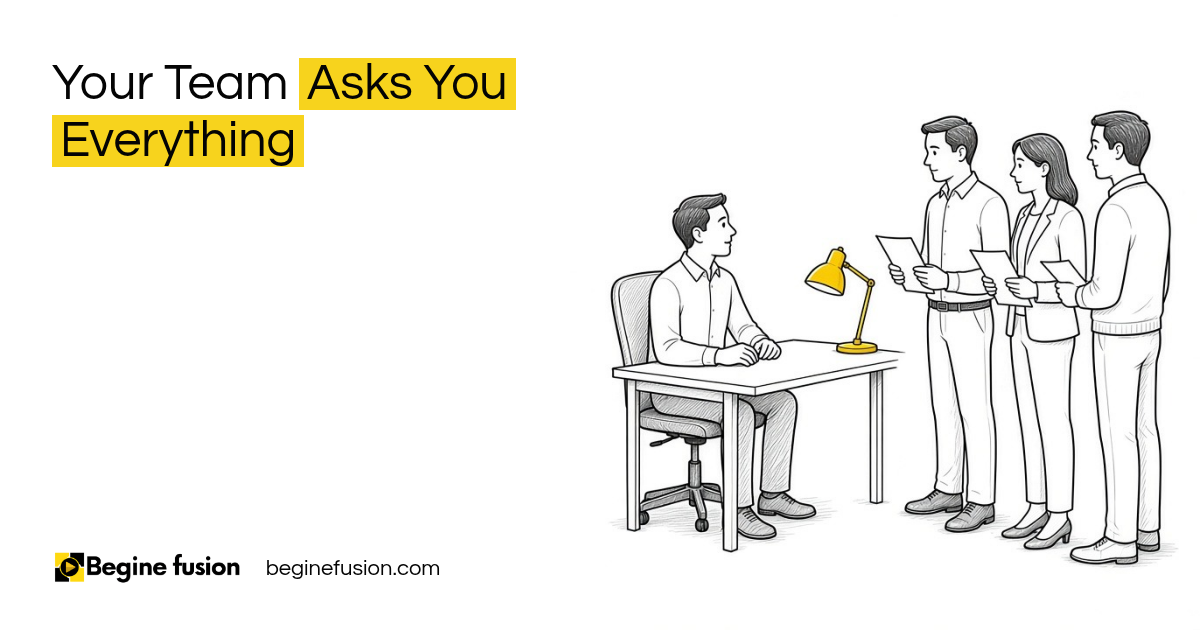
Your team comes back to you
Your team increasingly depends on you for decisions and guidance, because you do not have a system in place.
- If somebody needs to send a proposal, they come to you and say, which template should we use?
- If they have a question about an existing customer, they come back to you.

Every one of those questions is an answer that only you have.
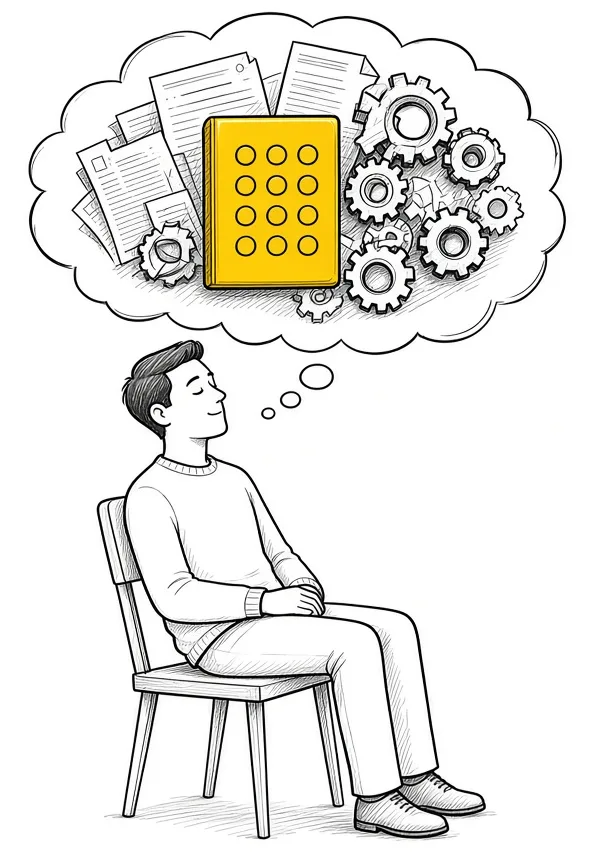
The answers are in your head
Part of mapping out your business context is interviews. We bring out the thing that is in your head, map it out and make it a repeatable system that supports your business. That is where it can help you scale.
If you are not sure how to explain what you do yet, our post on explaining a process before you automate it covers that step. Once it is written down, keeping one folder for your business gives it a home.
Your team runs it through the system
If you have team members who engage with a client, what they need to do is get the answers from the client and run them through that system. That way your business intelligence is no longer sitting only in your head.
It becomes a system you can use across multiple clients. It can be fast, and it can be done by multiple people within your team as well as you. That way you are able to replicate yourself, based on your experience and everything you have done, in a system that people can use.

Our post on getting your team to run the system without us covers the handover side.
Same intelligence, same results
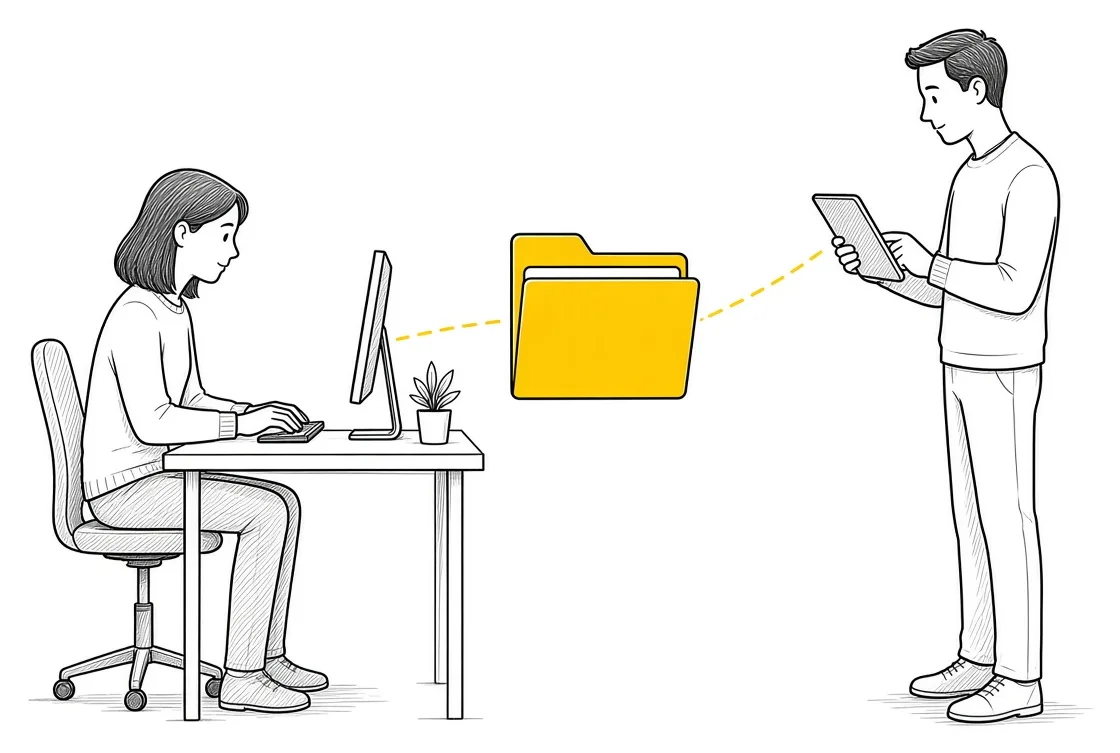
You can be here and another person can be somewhere else, and you are all using the same intelligence and the same system to get the same results.
That way it can be standardized. If somebody says this, these are the three things to look out for. That is the standard you create across your operations.
Our post on using AI for knowledge management goes further on keeping that intelligence in one place.
Takeaways and next steps
- The questions your team brings back to you show where the system is missing.
- Each one is an answer you are holding in your head.
- We bring each answer out, map it out, and make it a repeatable system.
- Your team runs what they get from a client through that system.
- That system becomes the standard across your operations.
Common mistakes when the team depends on you
1. Answering every template question yourself.
Why it fails: Your team keeps coming back, because there is no system in place.
Better approach: The answer mapped once, where the team can find it.
2. Keeping your experience in your head.
Why it fails: Your business intelligence only works when you are there.
Better approach: Interviews that bring it out into a repeatable system.
3. Treating this as an AI project only.
Why it fails: The AI has nothing standard to work from.
Better approach: The systems in place first, with AI added after.
Frequently asked questions
How do I know my team depends on me too much?
They come to you to ask which template to use, or with every question about an existing customer.
How do I get what is in my head into a system?
Through interviews. We bring it out, map it out, and make it repeatable.
Who uses the system?
Your team members. They get the answers from the client and run them through the system.
Is this an AI project?
AI is one part. The systems need to be in place.
Glossary
- Business context
- What your business does and how it does it, mapped out so people and AI can use it.
- Repeatable system
- A mapped process your team can run the same way every time, without asking you.
- Standard
- The agreed way your team handles a situation, such as the three things to look out for.


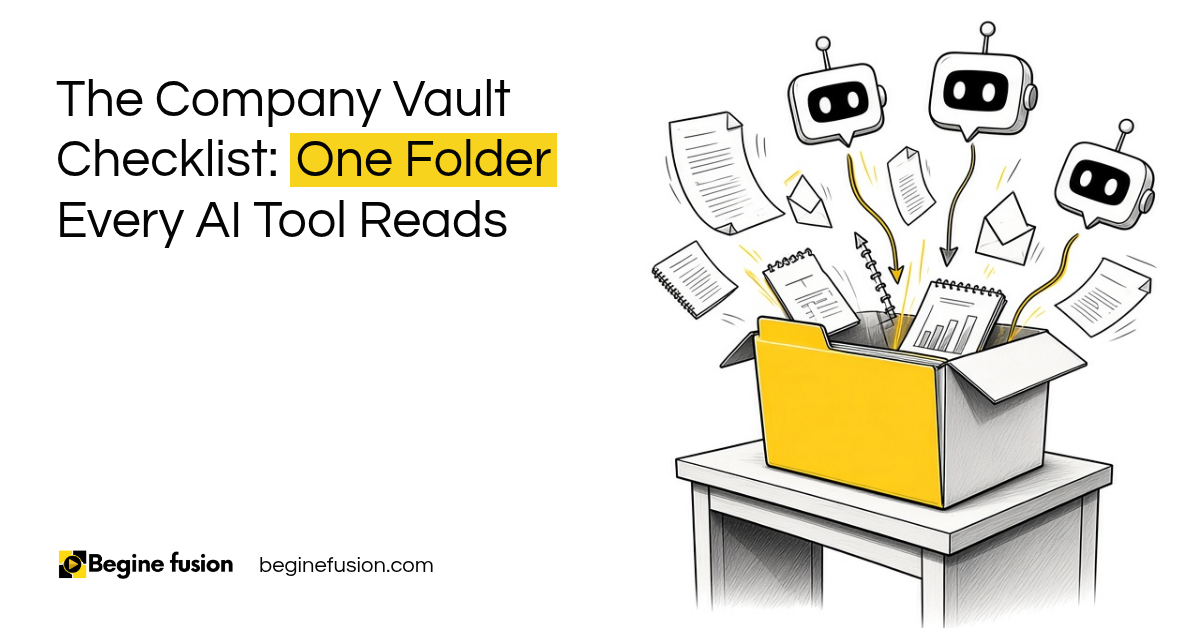 The Company Vault Checklist: One Folder Every AI Tool Reads
 Minimum Sales System Checklist: Before You Buy AI