
TL;DR
- The pattern: when you notice a recurring theme in the challenges or pain points your clients have, that theme is your opening.
- Build for it: develop something for that problem and take it to them: based on these problems, this is what we can deploy to solve your problem.
- Time with clients: when you have had time with them, you understand what their problems are and how to go about solving them.
- Both together: present the problem and the solution together, and you have their attention.
- Lead with one: lead with the biggest pain point, and expand the discussion once they come in.
What we usually do with partners is simple. Whatever falls outside what you offer the clients you work with, we can do that for them. The way in is a problem you have already seen.
The same pain points keep coming up
You may be seeing a recurring theme in the challenges or pain points your clients have. The same one comes up with client after client.

That theme is the place to build. We can develop something for it and take it to them and say: based on these problems, this is what we can deploy to solve your problem. Our post on the questions that shape a sales process covers how to hear those problems in the first place.
Time with clients shows you their problems
Clients are often unaware of what is possible. You are in a different position. When you have had time with them, you understand what their problems are, and you understand how to go about solving them.

That time is what makes the offer fit. Our post on picking clients by business stage covers which clients to spend it with.
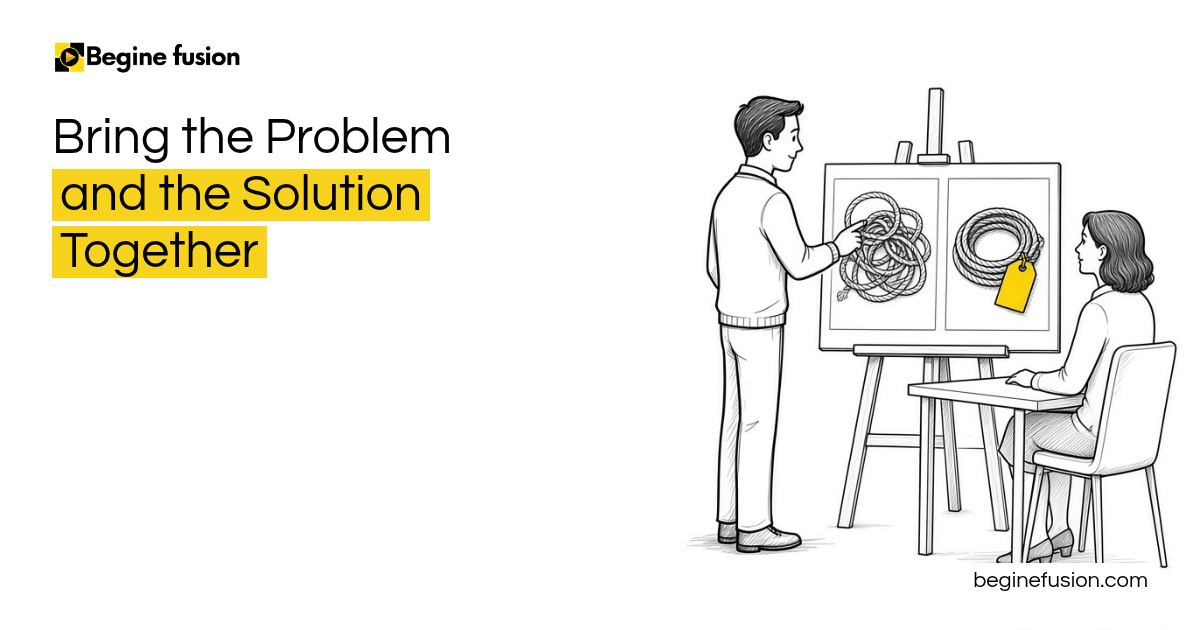
Present the problem and the solution together
When you present the problem and the solution to them together, you have their attention. They see their own problem, and they see how it gets solved.

The problem on its own is something they already live with. The solution on its own is one more offer. Together, they read as: this is how I can do this.
It works today, and it can work better
There is an old saying: if it works, leave it alone. A system can work today and still be done better. A better way can exist before you have heard of it.

That is the gap the solution fills. Your client’s way of working gets them through the day. The solution shows them how the same work can be done better.
Lead with the biggest pain point
Begin with one. Instead of saying we can do one, two, three, four, five, six things, say we can do this. That one should be the biggest pain point, and the message is: we can help you solve this problem.
When they come in and the conversation is going, you can say: in addition to this, we also do these other things, and they can help you. Leading with one keeps the message clear, and the rest of the offer follows once they are in. Our post on turning old emails and proposals into content covers how to reuse what you already wrote about those problems.
Takeaways and next steps
- The recurring pain points across your clients go on one list.
- The biggest one on that list is where you build.
- The pitch names the problem and the solution together.
- A client’s system can work today and still be done better.
- One clear offer comes first, and the rest of what you do follows once they are in.
Common mistakes with pitching a solution
1. Pitching the whole list of services.
Why it fails: The message spreads across six offers at once.
Better approach: Lead with the biggest pain point and one solution.
2. Pitching the solution on its own.
Why it fails: The client has to work out what problem it solves.
Better approach: Present the problem and the solution together.
3. Waiting for the client to ask.
Why it fails: Clients are often unaware of what is possible.
Better approach: Bring the problem you have seen to them, with the solution.
Frequently asked questions
Where does the idea for the solution come from?
From a recurring theme in the challenges or pain points your clients have. When the same problem keeps coming up, that is the one to build for.
Why present the problem and the solution together?
Together they get the client's attention. They see their own problem and how it gets solved.
How many things should the first pitch offer?
One. Lead with the biggest pain point, then expand the discussion once they come in.
What if the client says their system already works?
It can work today and still be done better. The solution shows how.
When do the other services come up?
Once they are in and you are having conversations. In addition to this, we also do these other things.
Glossary
- Pain point
- A problem a client feels in their business, often one that keeps coming up.
- Recurring theme
- The same challenge showing up across more than one client.
- Cross-sell
- Offering a client a second service once they are working with you on the first.
- Upsell
- Offering a client a larger version of the service they already use.


 Minimum Sales System Checklist: Before You Buy AI
 The Company Vault Checklist: One Folder Every AI Tool Reads