
TL;DR
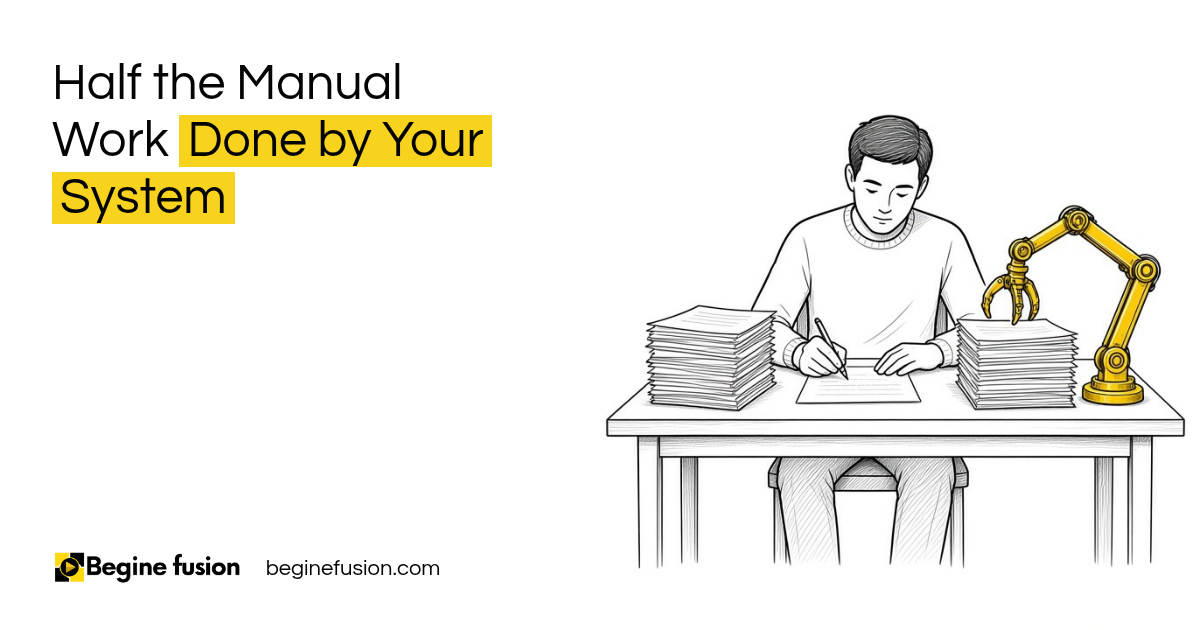
- The split: the world has changed, business has changed, so you do 50% of the manual work yourself, and your system does the remaining 50%.
- What system means: AI is in your system, alongside your automations. Some run without AI, some run with AI.
- You approve: the AI sends you things for approval with one message: this is done, review this.
- One example: an agent that looks for opportunities on a schedule, surfaces what it finds and asks before it creates or submits anything.
The world has changed, business has changed, and industries have changed. At this point, 50% of the manual work is yours, and the remaining 50% should be done by your system.
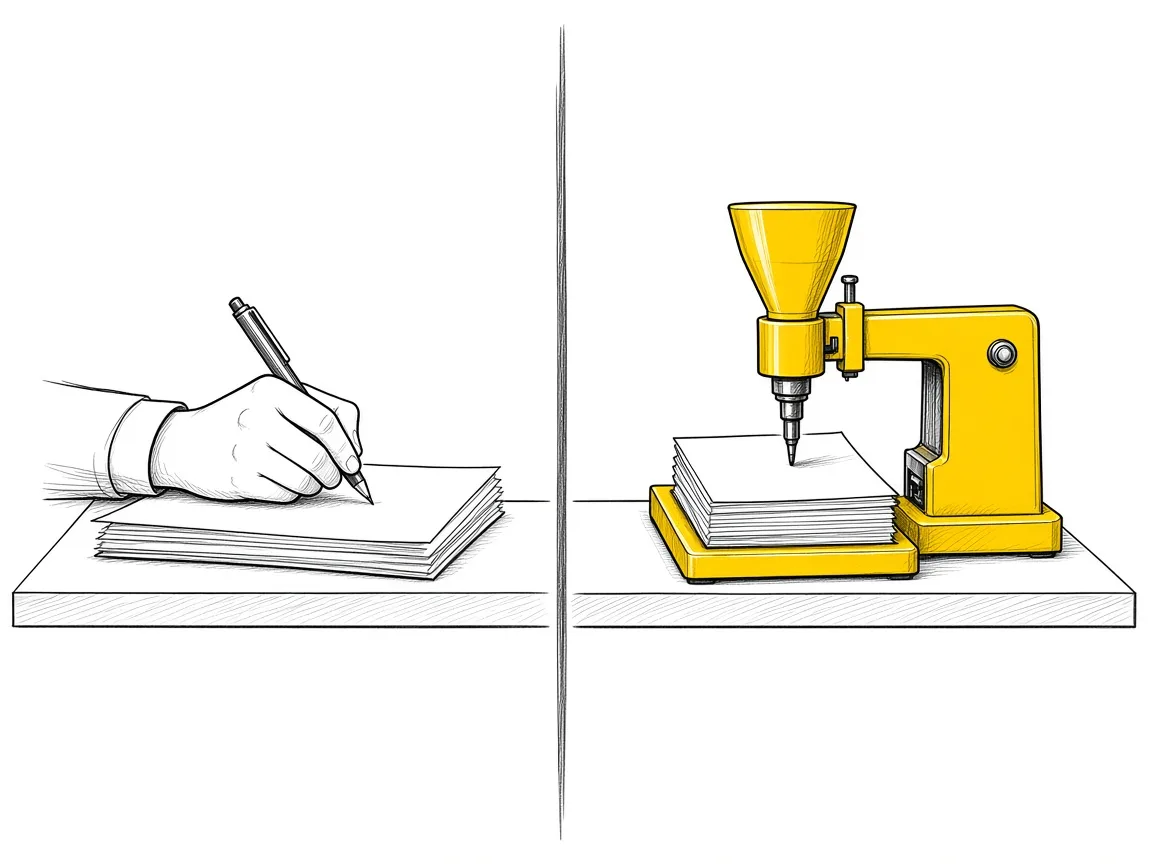
You do 50%, and your system does 50%
That split is a place to begin. The question for the manual work in your business today is which half could move to your system.
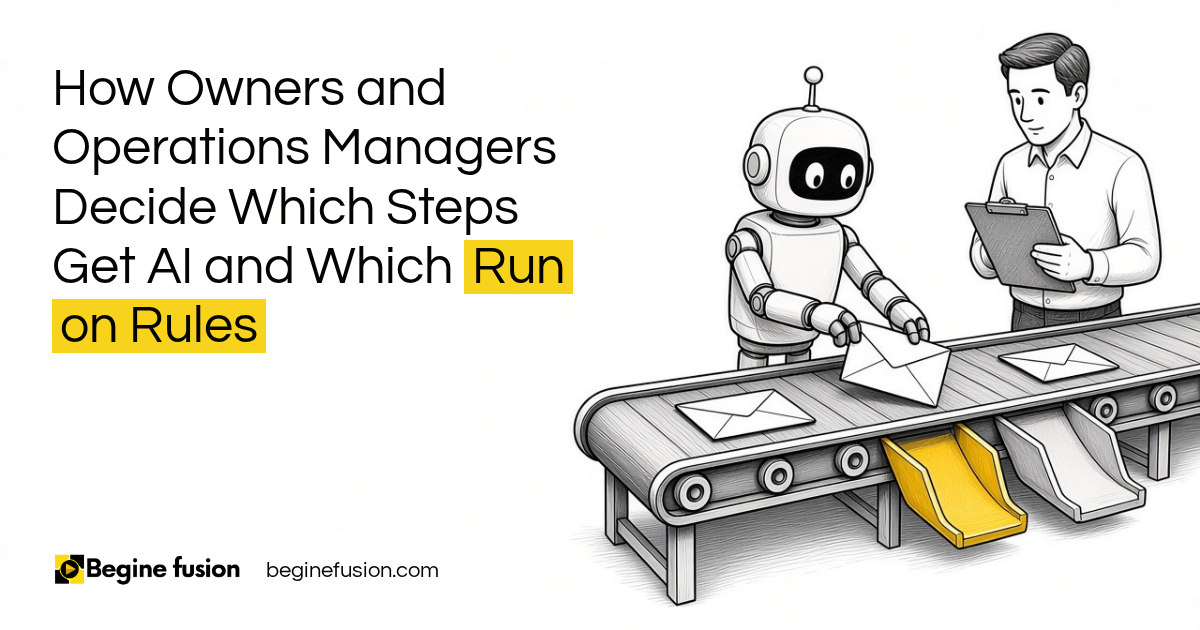
Our post on which steps get AI goes through how to pick the steps.
What “your system” means
When I say system, AI is in your system. You also have your automations and the flows that connect your tools.
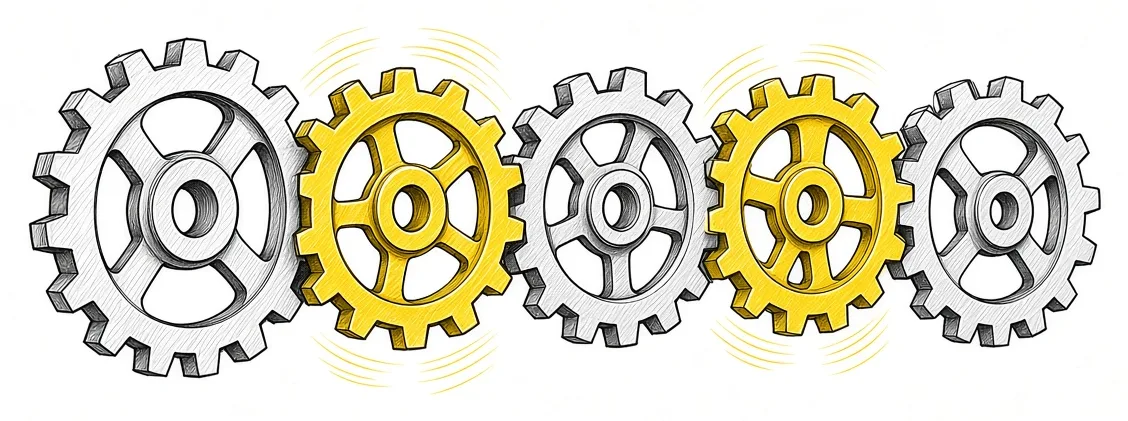
Some of those things can run without AI. Some of them can run with AI. Both count toward the 50%. Our post on AI in the back end covers the back-office side.
The AI sends you things for approval
From there, the AI sends you things for approval.

Each one comes with the same message: this is done, review this. You stay the one who approves. Our post on keeping a person in the loop on AI work covers how to set up that step.
An example from demand generation
Demand generation is one example. We have a flow powered by an AI tool. It runs three times a week, Monday, Wednesday and Friday, and scans the markets we operate in.
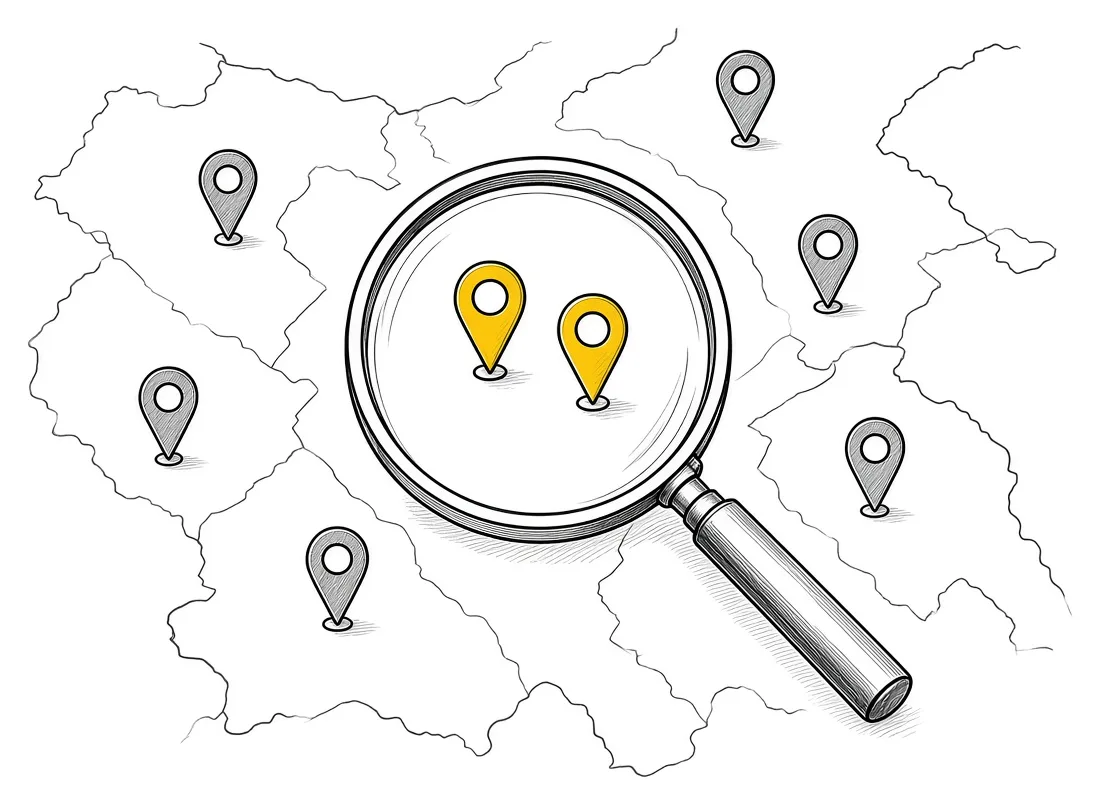
Anything related to grants, RFPs, RFQs and other opportunities, based on the criteria we set, it surfaces: today there are two opportunities like that here, and one there.
It asks whether you want it to create the application for you. When you say yes, it creates the application and asks whether to submit it. That answer is yours.
That is still part of your sales system, because it finds opportunities you might have missed, or would have spent hours looking for.
It can find people too
In the same way, it can find people. It tells you it found someone in your city, what they do, and asks whether you want to connect with them.
Those things can be done as an automation.
Takeaways and next steps
- The manual work in your business today goes on one list.
- Half of that list can move to your system.
- Some of it runs as automations without AI, and some runs with AI.
- The AI sends you finished work for approval.
- One area, such as finding opportunities, runs on a schedule.
- The final yes, such as submitting, stays with a person.
Common mistakes with automation
1. Treating AI as the whole system.
Why it fails: Simple automations that run without AI get overlooked.
Better approach: Count both, the ones with AI and the ones without.
2. Letting it submit on its own.
Why it fails: Work goes out before a person has looked at it.
Better approach: Each piece comes to you for review: this is done, review this.
3. Doing all of the manual work yourself.
Why it fails: Your time goes on work your system could do.
Better approach: Your system takes half of it.
Frequently asked questions
How much of the manual work should my system do?
A good place to begin is half. You do 50% of the manual work, and your system does the remaining 50%.
Does every automation need AI?
Some can run without AI and some with AI. Both are part of your system.
Who approves what the AI produces?
You do. The AI sends you finished work: this is done, review this.
What is an example of the system doing the work?
An agent that runs on a schedule, looks for opportunities that match your criteria, surfaces them and asks before it creates or submits an application.
Is finding opportunities part of a sales system?
Yes. It finds opportunities you might have missed, or would have spent hours looking for.
Glossary
- Automation
- A step your tools carry out on their own, with or without AI.
- Demand generation
- The work of creating interest in what you sell, before a lead is captured.
- RFP
- Request for proposal, a document an organization publishes when it wants bids for a project.
- Approval step
- The point where a person reviews what the system produced before it goes out.


 AI Readiness Checklist: 7 Questions Before You Build
 The Agent Never-Do List