
TL;DR
- Pick by stage: the best client is a business that has decided it needs a change because something is not working.
- The frustration point: they have hit a roadblock or a brick wall, and their people are spending too much time on work like one particular report.
- They are in agreement: at that stage the conversation is how we make this happen, so you spend the call on the plan instead of convincing them.
- Industry is for examples: list the industries you know on your website, then let the stage decide who you call back first.
Somebody asked me who our ideal customer is. If they are out there talking to somebody, how do they know when to reach out and say, hey, you guys could be a good match?
I answer with the stage the business is in. We work with pretty much every industry.
The stage is when a company says, okay, we need a change. Something is not working. We don’t know what it is we want to change, but we want to change.
That is the time we want to come in.
What does that stage sound like on a call?
When there is that frustration and they have hit a roadblock or a brick wall, you hear it in how they describe their week. These are the lines I listen for.
| What they say | What it tells you |
|---|---|
| “My people are spending too much time working on a particular report.” | The work is manual and somebody has noticed what it costs. |
| “We are drowning in paperwork.” | There is no automation behind the scenes. |
| “We need help to understand our marketing metrics.” | They want numbers they can act on. |
| “We have been doing something on LinkedIn and it is not working. We want to try something new.” | They have run it long enough to know. |
| “We have seen a lot of things online about AI. We want to give AI a try inside our business.” | They are ready to try AI on their own work. |
It all boils down to people that have problems that need a change. Any of these lines is a reason to keep talking.

What changes in the conversation at that stage?
The people at this stage are in agreement that something needs to change. It could be technology, marketing, AI or a CRM. They are willing to move ahead.
So the call sounds different. They ask, okay, how can we make this happen? And I can answer: this is what we need to do, this is what it is going to cost and this is how long it is going to take.
Compare that with a business that has no frustration yet. There you end up telling them what could happen if they made a change, and they have nothing pushing them to act on it.
At the right stage it is, okay, let’s go. Let’s get everything done.

Where does the industry come in?
Industry still has a job. We have typically worked with not-for-profits, associations, service based businesses and professional services. Those are the industries we called out on our website, because they keep coming to us.
We do not restrict ourselves to them. We have also worked with cyber security companies and manufacturing.
Two other things sit next to the stage:
- Size. We have worked with startups, established businesses and mid level companies. We don’t do enterprise.
- Digital maturity. Not all companies are at the stage where they need everything. Depending on their digital maturity, we implement a portion or one module first.
If you are trying to read how ready a business is, AI capability vs. business readiness walks through how far apart those two can be.
How do you tell the people who refer you?
The question came from somebody who wanted to send people my way. Give the people who refer you a sentence they can use without you in the room.
Mine is this: when a business tells you something is not working and they want to change it, even if they don’t know what it is yet, that is when to reach out.
Referrals tell me a lot. If we are getting leads from the website or from ads and we are getting none from referrals, then I know something is wrong. It is a test of the trust my network has in the business and in me.
Once a referral lands, the follow-up has to move fast while they still feel that frustration. That is why we hand off the follow-up work after a discovery call with one button, and why it pays to track where every customer comes from.
What do you do on the first call?
At that stage, people want answers fast. I still need to understand the problem before I recommend anything.
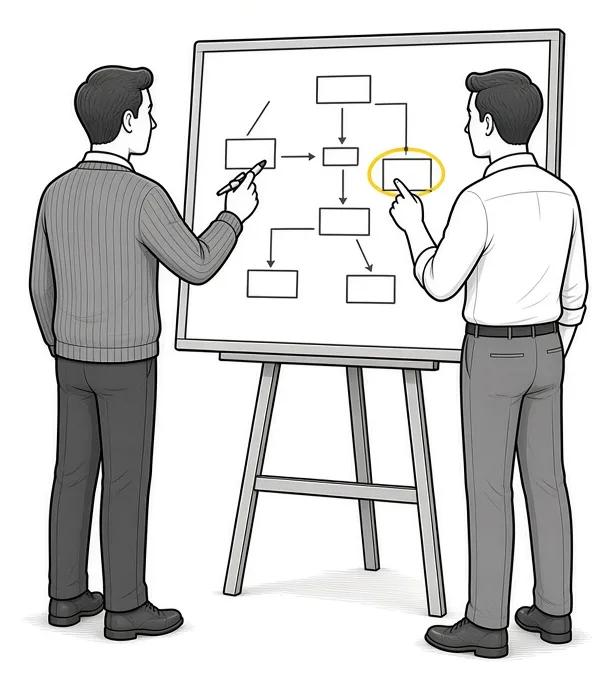
So we map the process. We find the pain points. Then we talk about the website, the CRM or the AI that fixes them. You can see the questions I ask about a sales process on that first call.
A business that knows something is not working usually can’t explain the whole flow yet, and that is fine. Mapping it with them is part of the work. Our six step approach to digital adoption lays out where that mapping fits.
What changes in how the work runs
You stop spending calls convincing people that change is needed. The people you talk to have already decided that, so the first call goes to the plan, the cost and the timeline.
Your website can still list the industries you know. The people who refer you know which sentence to listen for, and the businesses they send you are ready to move.
Takeaways and next steps
- Describe your ideal client by the stage they are in: something is not working and they have decided to change it.
- Listen for the frustration lines: too much time on one report, drowning in paperwork, marketing that has stopped working.
- Use industry for examples on your website and in your proposals.
- Be clear on size and digital maturity so you know how much to implement first.
- Give the people who refer you one sentence to listen for.
For how we take a business from that point into the work, read how digital adoption works.
Common mistakes when picking clients
1. Defining your ideal client only by industry.
Why it fails: You end up chasing businesses that fit the industry and have no reason to change this year.
Better approach: Describe the stage first, then use industry for examples.
2. Trying to convince a business that has no frustration yet.
Why it fails: You spend the call explaining what could happen and they have nothing pushing them to act.
Better approach: Keep in touch, and come back when they tell you something is not working.
3. Waiting until they know exactly what they want.
Why it fails: Knowing what to change is the part they need help with.
Better approach: Talk to them while they still say they don’t know what it is, and map the process with them.
4. Giving referrers a list of industries.
Why it fails: They can’t tell from an industry whether a business is ready.
Better approach: Give them the stage sentence to listen for.
5. Selling the full build to every business at that stage.
Why it fails: A company early in its digital maturity can’t take everything on at once.
Better approach: Implement one portion or module first, then add to it.
Frequently asked questions
What is an ideal client profile for a consultant?
A description of the business you can help most. I describe it by the stage the business is in: they have decided they need a change because something is not working.
How do I know a business is ready to change?
Listen for frustration. Their people spend too much time on a report, they are drowning in paperwork, or their marketing has stopped working and they want to try something new.
Should I still pick an industry to focus on?
Use industries for examples on your website and in proposals. Let the stage decide who you talk to first.
What if a business wants change and does not know what to change?
That is a good time to come in. Map the process with them and find the pain points before recommending anything.
How do I explain my ideal client to people who refer me?
Give them one sentence: when a business says something is not working and they want to change it, reach out.
Do you work with enterprise companies?
No. We work with startups, established businesses and mid level companies.
Glossary
- Ideal client profile
- A short description of the business you can help most, used to decide who to talk to.
- Stage
- Where a business is in its decision to change. The stage we look for is when they have agreed something is not working.
- Digital maturity
- How much of a business already runs on systems and automation instead of manual work.
- Process mapping
- Writing down each step of how work moves today, so the pain points are visible before anything is built.
- Referral
- A lead that comes from someone who already trusts you and sends a business your way.
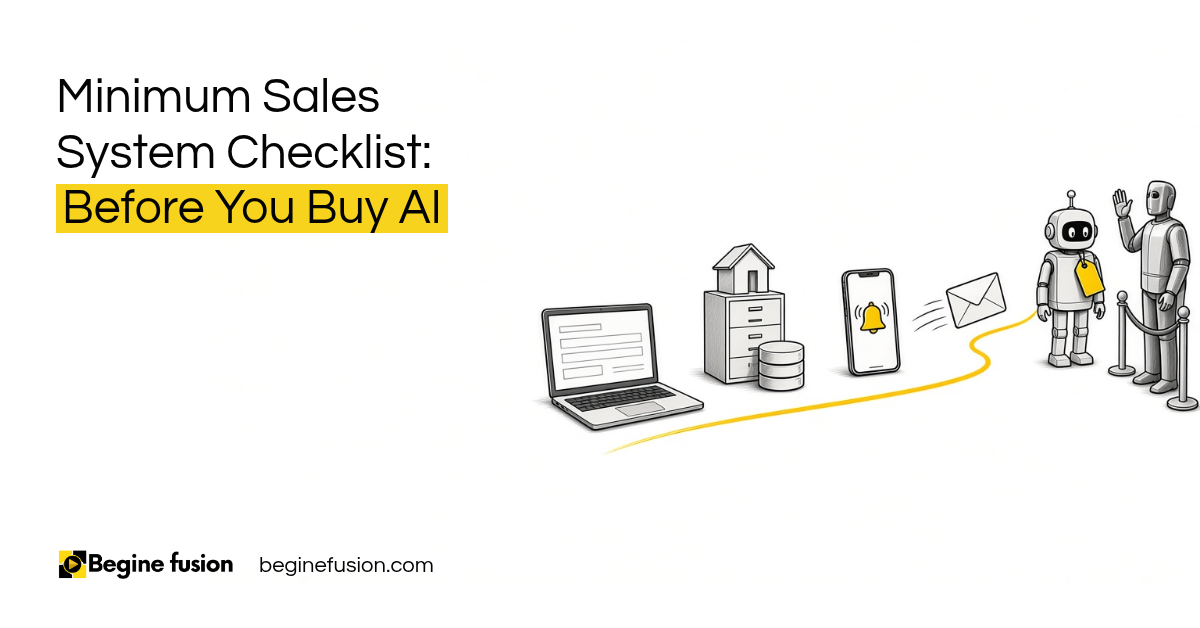 Minimum Sales System Checklist: Before You Buy AI
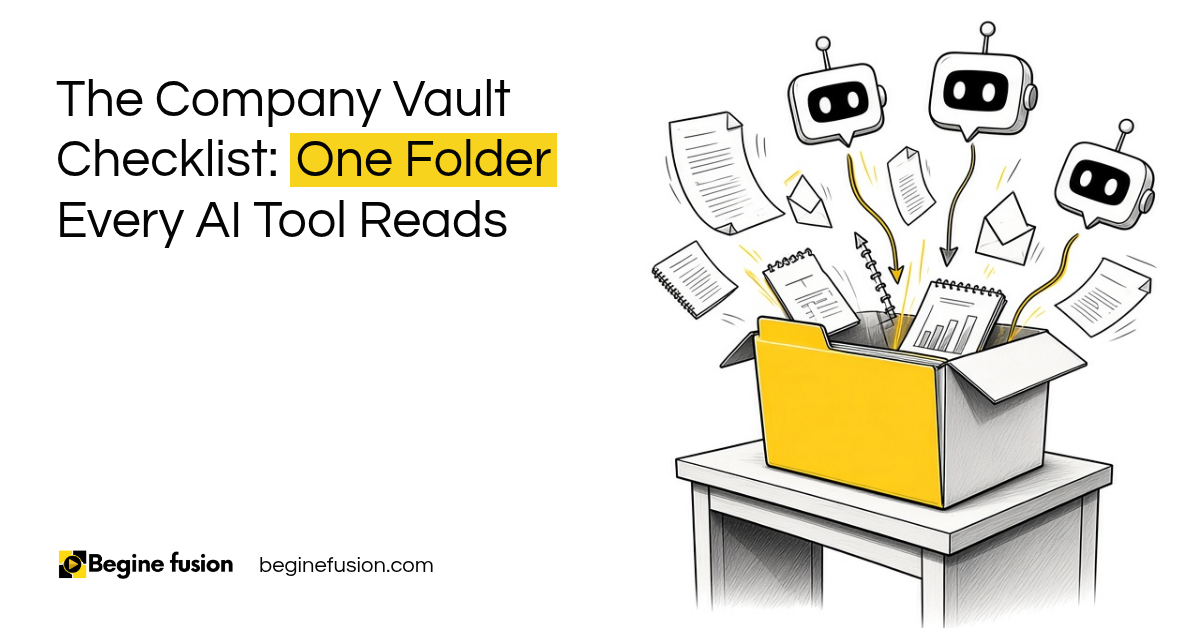 The Company Vault Checklist: One Folder Every AI Tool Reads