
TL;DR
- Peer collaboration: agents of equal standing exchange work. There is no manager agent and no supervisor agent.
- Challenge: no single agent should dominate, and agents must challenge the work of others.
- Cap the rounds: each decision gets two or three discussion rounds, so it cannot run from now till next year.
- Shared workspace: agents put their evidence, open questions and unresolved conflicts in one place, the way people in a room brainstorm.
- Debate: two agents argue the same question and a judge decides on the evidence.
Some agent work runs through a manager agent. Some of it runs with agents working side by side. When agents work side by side, they need controls on how they talk to each other.
When agents work as peers
In peer collaboration you have agents of equal standing exchanging work. There is no manager and no supervisor agent. It is a normal organogram drawn as a flat line, with pairs working in collaboration.
You use this when multiple disciplines are equally important. No single agent should dominate, and agents must challenge the work of others. They exchange findings, evidence, objections and positions.
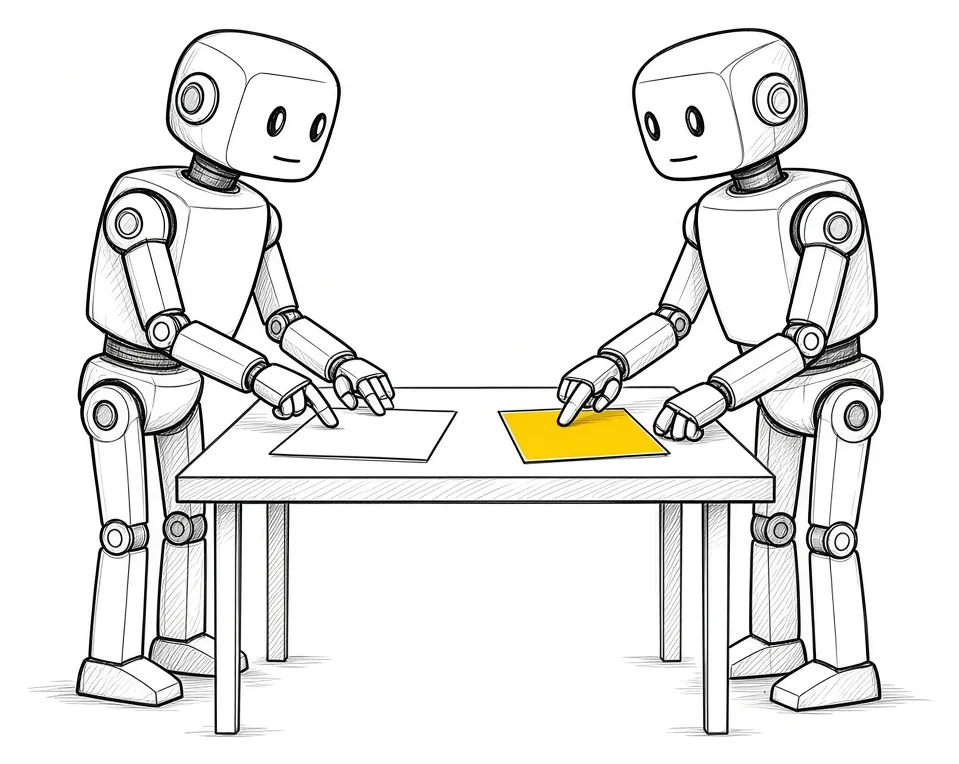
You need a collaboration protocol so that an agent does not think it is the manager of another agent. Every agent should understand its role within the structure. Our post on why everyone in the business supervises AI agents covers the people side of that.
Cap the discussion rounds
If you want agents to discuss among themselves, you do not want it to be open ended, with them discussing from now till next year.
You need to cap it. For this decision, the discussion rounds are three, or two. Conflict resolution and final decision authority also need to be part of the controls.
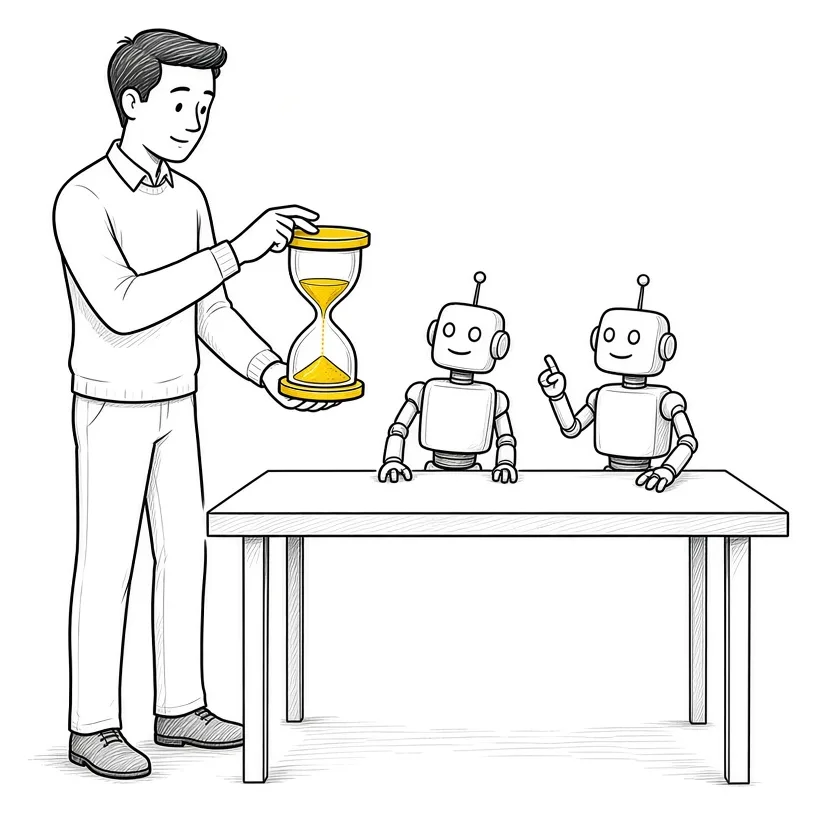
A cap on rounds is one of the stopping conditions in the 10 AI agent failure modes I check for.
A shared workspace for the brainstorm
The second structure is the blackboard. Agents contribute to a shared workspace that holds the evidence, the hypothesis and the open questions.
Research agents put their research in the workspace. Analyst agents analyse it and put that there too. A critique agent does the critique, and a writer agent adds its own part. The workspace holds:
- the evidence
- the hypothesis
- the task
- open questions
- partial output and decisions
- confidence levels
- unresolved conflicts
Use this when knowledge develops gradually. It works the same way as putting people in a room to brainstorm. This is something I use a lot. I give different agents a topic, and I want everybody’s input into that thing.
Because many agents contribute to one result, the system must keep the thinking and the work in between. The controls here are your state schema, edit permissions, versioning, deduplication, conflict resolution and retention limits.
Let two agents debate and a judge decide
The third structure is the debate. Two positions argue the same question, and a judge decides on the evidence.
Agent A and agent B argue about something, then send their arguments to a judge, who says, “I have looked at what both of you have said, and this is what I think.”
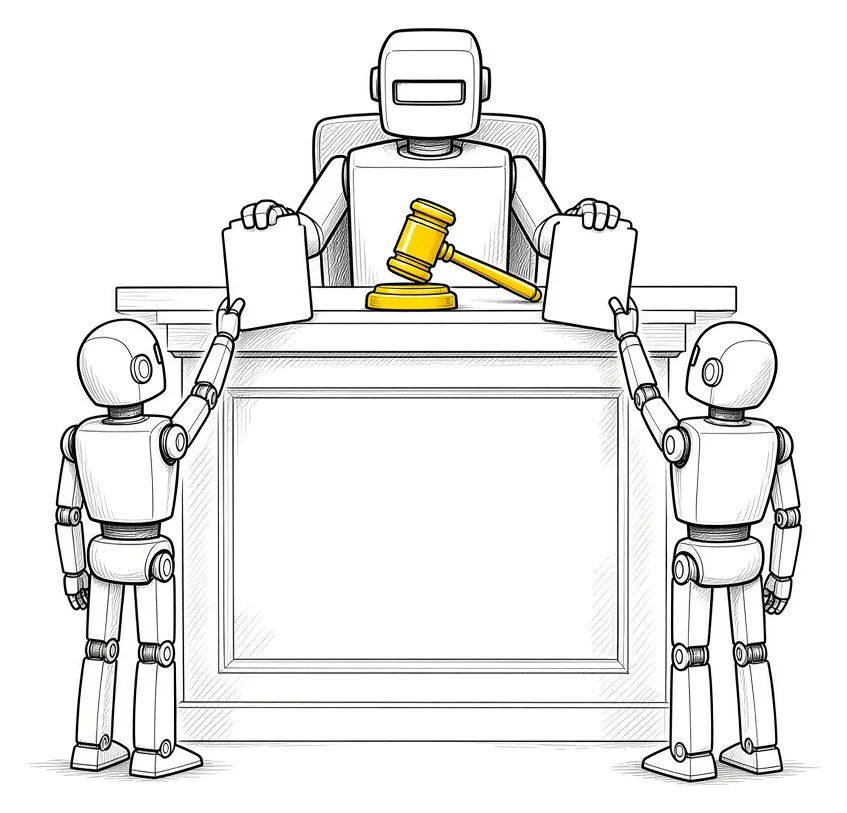
You use this when an assumption must be challenged. Say you have two assumptions: should we do A or should we do B? You put it to the test. You spin up agent A, agent B and the judge, and they go through it. This structure also fits when options must be challenged, strategic alternatives must be compared, risk analysis needs opposing views, or confidence is low.
The judge has to use evidence
Here is the warning. Debate improves scrutiny. Debate does not guarantee factual accuracy.
The judge must use the evidence, and the stronger argument alone should not win. It works the way a court of law does. Each side presents evidence, and the judge looks at the evidence and decides.
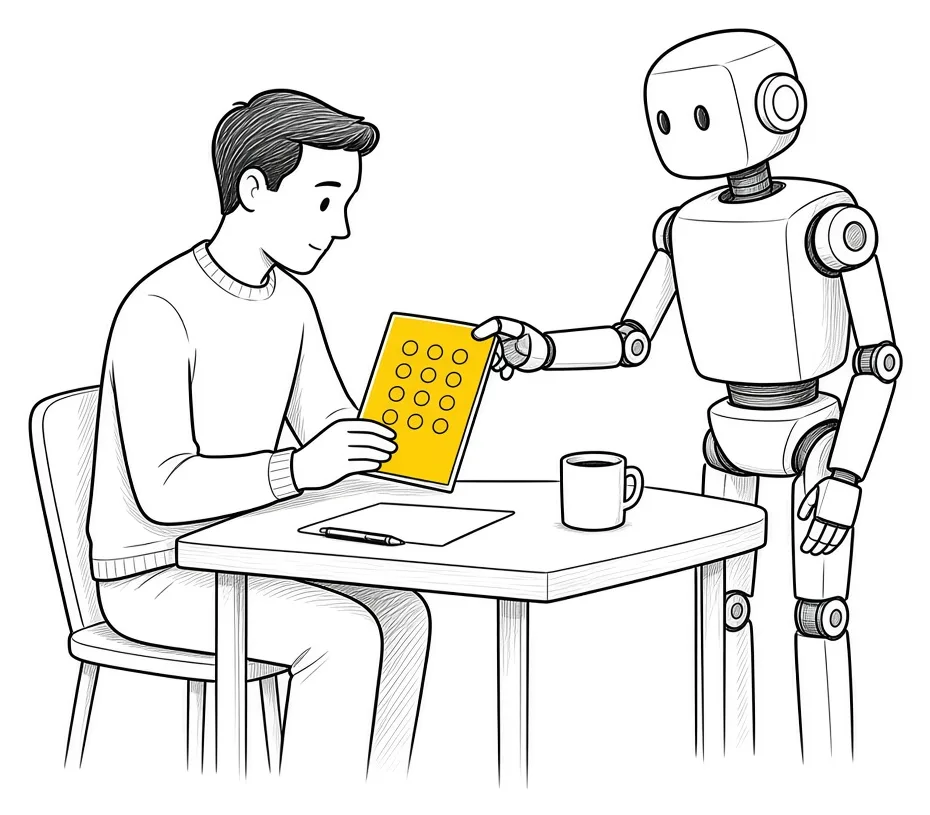
If you are still deciding what each agent should do, our post on building AI workers covers that step.
Takeaways and next steps
- Peer collaboration fits when multiple disciplines are equally important.
- A collaboration protocol keeps any agent from thinking it manages another.
- Each decision gets two or three discussion rounds.
- The controls name the conflict resolution and the final decision authority.
- A shared workspace helps when knowledge develops gradually.
- A debate and a judge help when an assumption must be challenged.
- The judge decides on evidence.
Common mistakes with agents that discuss
1. Letting agents discuss with no limit.
Why it fails: The discussion is open ended and can run from now till next year.
Better approach: Two or three discussion rounds for each decision.
2. No collaboration protocol.
Why it fails: An agent starts acting like the manager of another agent.
Better approach: Every agent understands its role within the structure.
3. Treating the debate result as fact.
Why it fails: Debate improves scrutiny but does not guarantee factual accuracy.
Better approach: A judge that decides on evidence.
Frequently asked questions
What is peer collaboration between AI agents?
Agents of equal standing exchange work, with no manager agent and no supervisor agent.
How many discussion rounds should agents get?
Each decision gets a cap of three rounds, or two.
What goes in a shared workspace?
The evidence, the hypothesis, the task, open questions, partial output, confidence levels and unresolved conflicts.
When should two agents debate?
When an assumption must be challenged, such as whether to do A or B.
Does a debate make the answer correct?
It improves scrutiny. The judge still has to decide on the evidence.
Glossary
- Peer collaboration
- Agents of equal standing exchanging work, with no manager agent.
- Discussion round
- One pass of agents exchanging positions on a decision. The number of rounds is capped.
- Blackboard
- A shared workspace where agents put evidence, open questions and unresolved conflicts.
- Final decision authority
- The one who makes the call when agents still disagree.
 The Agent Never-Do List
 AI Readiness Checklist: 7 Questions Before You Build